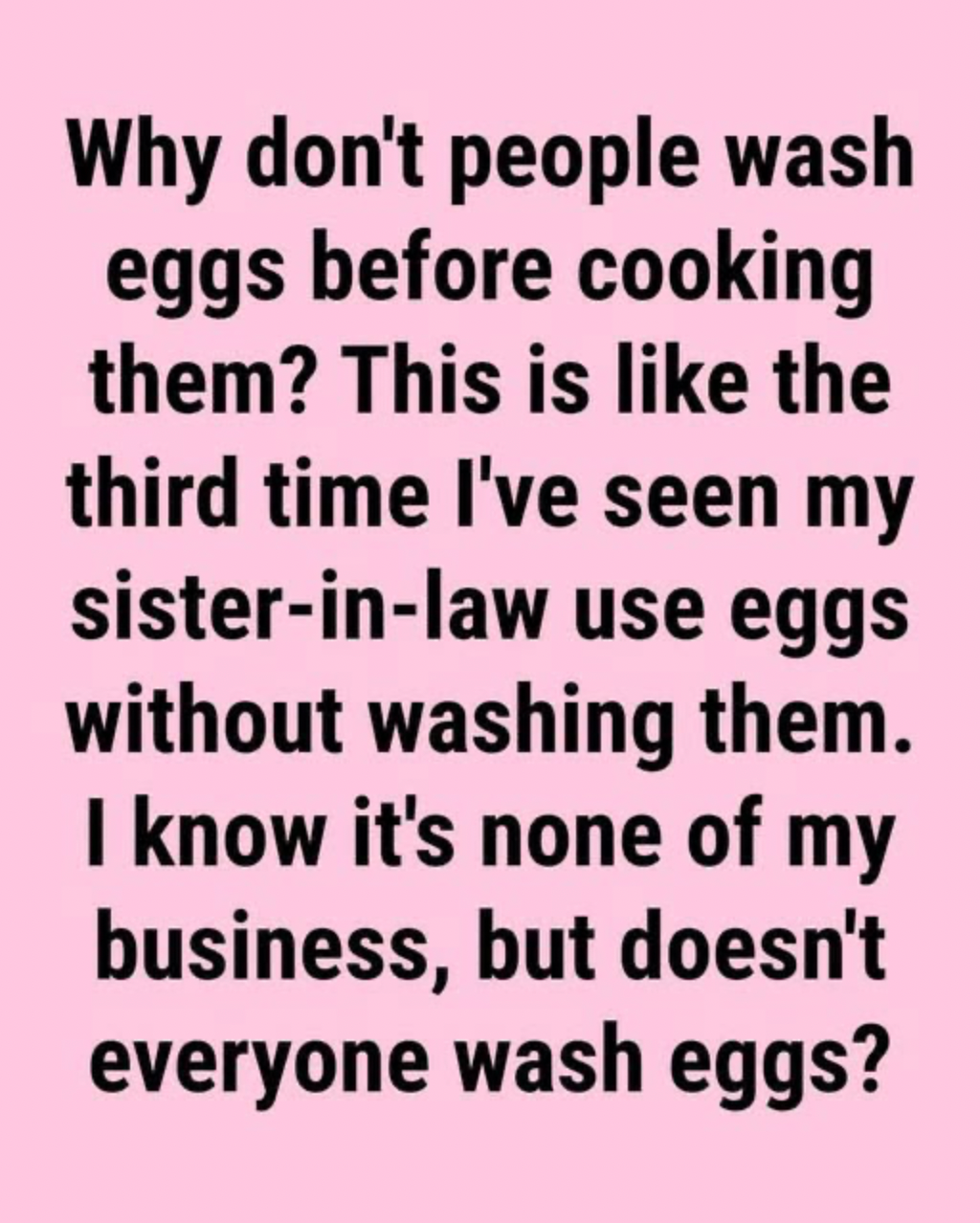
Should you wash eggs before cooking them?
But behind this simple idea lies a surprisingly complex mix of:
- food safety science
- farming practices
- cultural habits
- industrial processing rules
- microbiology
- and even psychology (how “clean” something looks vs how safe it actually is)
Some people wash eggs instinctively. Others refuse to touch them with water. And depending on where you grew up, both groups may believe the other is doing something dangerous.
The truth is not extreme—it’s nuanced.
To understand the correct answer, we first need to understand what an egg actually is, how it is protected in nature, and how modern food systems change that protection.
1. What an Egg Really Is: More Than Just a Shell
An egg may look simple, but biologically it is a highly engineered natural structure designed to protect life.
It has several layers:
The outer shell
- made mostly of calcium carbonate
- porous (has microscopic holes)
- allows gas exchange for the developing chick
The cuticle (bloom)
- a thin, invisible protective layer
- covers the shell naturally when laid
- acts as a bacterial barrier
Shell membranes
- two thin layers inside the shell
- help block bacterial movement
- support structural integrity
Egg white (albumen)
- contains antimicrobial proteins
- acts as a second defense system
Yolk
- nutrient-rich environment
- designed for embryo development
So even before human intervention, eggs already come with a multi-layer defense system.
2. The Most Important Layer: The “Bloom”
The key to understanding whether eggs should be washed is the cuticle, also called the bloom.
What is the bloom?
It is a natural coating deposited on the shell just before the egg is laid.
It is:
- invisible
- slightly waxy
- very thin
- highly important
What does it do?
The bloom acts like a protective shield:
- seals microscopic pores
- prevents bacteria from entering
- reduces moisture loss
- extends shelf life naturally
Think of it as a natural “plastic wrap” created by the hen.
Why this matters
If you wash an egg aggressively:
Should You Be Washing Eggs Before Cooking?
you may remove this protective barrier.
Once removed, the shell becomes more vulnerable because:
- bacteria can enter through pores
- moisture loss increases
- contamination risk becomes higher over time
3. Why Eggs Are Sometimes Dirty
Eggs do not come from sterile environments.
Depending on farming conditions, they may have:
- dust
- feathers
- droppings
- straw particles
- soil residue
This is completely normal in farm environments.
But here is the important distinction:
dirt on the outside does NOT automatically mean the egg inside is unsafe.
The shell is still a barrier.
4. The Global Difference: Why Advice Changes by Country
One of the biggest reasons people are confused is that egg handling systems are different around the world.
There are two main systems:
A. Washed Egg System (United States, Canada, Japan)
In this system:
- eggs are washed commercially
- sanitized in regulated facilities
- sometimes lightly coated with protective mineral oil
- bloom is removed during processing
- refrigeration is mandatory
Why they are washed:
Because farms are large-scale, eggs pass through standardized cleaning systems to reduce bacterial risk at production level.
B. Unwashed Egg System (Many European countries, UK in some cases)
In this system:
- eggs are NOT washed after laying
- bloom remains intact
- eggs are stored at room temperature
- natural barrier is preserved
Why they are not washed:
The idea is to preserve the egg’s natural protection layer.
Key takeaway from this difference:
Washing eggs is not a universal rule. It depends on how the egg system is designed.
5. The Science of Bacteria and Eggs
The main concern behind egg washing is Salmonella, a type of bacteria that can cause food poisoning.
But here’s what matters:
Where Salmonella can exist:
- on the shell surface
- inside the egg (rare, but possible depending on conditions)
What increases risk:
- cracked shells
- poor storage conditions
- improper handling
- cross-contamination in kitchen
Important scientific point:
👉 Most food safety experts agree that the biggest risk is NOT the dirty shell itself, but how eggs are handled and cooked.
6. Why Washing Eggs Can Sometimes Increase Risk
This surprises many people.
But washing eggs under certain conditions can actually:
1. Push bacteria inside
If water is contaminated or temperature is wrong, bacteria can be pulled into the shell through pores.
2. Remove natural protection
Without bloom, the egg becomes more exposed.
3. Encourage moisture penetration
Water can carry contaminants through microscopic openings.
This is why food safety agencies often recommend:
Do not wash eggs at home before storage.
7. The Psychology of “Clean = Safe”
One of the biggest reasons people wash eggs is visual comfort.
We tend to believe:
- clean = safe
- dirty = dangerous
But food safety does not always match appearance.
An egg can:
- look clean but be unsafe if mishandled
- look dirty but still be safe internally
So washing is often more about perception than actual safety improvement.
8. What Experts Generally Recommend (Core Principle)
Across most food safety guidelines, the general advice is:
Do NOT wash eggs before storing or cooking
Instead:
- store properly
- handle carefully
- cook thoroughly when needed
- clean only visible dirt if absolutely necessary
9. Where Washing Eggs Might Be Acceptable
There are limited exceptions:
1. Heavy visible dirt
If mud or manure is stuck, gentle wiping may be used.
2. Immediate use only
If washed, eggs should be cooked immediately.
3. Dry cleaning preferred
Use a dry cloth or paper towel instead of water.

Welcome to my kitchen!
I’m a passionate home cook and recipe creator who loves turning simple ingredients into delicious, comforting meals that everyone can enjoy. Through this website, I share carefully prepared recipes, practical cooking tips, and easy-to-understand food education to help you feel more confident in the kitchen.
My goal is to make cooking simple, enjoyable, and accessible. Whether you are looking for a quick family dinner, a delicious dessert, healthy meal ideas, or traditional recipes with a modern touch, you’ll find inspiration here.
More Than Just Recipes
I believe that cooking is also a way to learn. That’s why this website is not only about recipes. I also create educational articles about ingredients, cooking techniques, kitchen tips, food preparation, and the stories behind different dishes.
Each article is designed to give you useful knowledge that you can apply in your own kitchen. From understanding how ingredients work together to learning better cooking methods, my aim is to help you become a more confident and creative cook.
My Philosophy
Good food doesn’t always require complicated ingredients or professional equipment. With a little knowledge, patience, and creativity, simple ingredients can become something truly special.
I believe in sharing recipes that are practical, clearly explained, and enjoyable to make. I also love exploring new flavors while appreciating traditional cooking and the recipes passed down through generations.
Thank you for visiting my kitchen and being part of this food-loving community. I hope my recipes and articles inspire you to cook, learn, experiment, and most importantly, enjoy every bite!
Happy cooking!