Every family seems to have at least one mysterious object tucked away in a cupboard, attic, sewing room, or storage box. These forgotten items are often passed down from one generation to the next, sometimes received as gifts or inherited from relatives, yet their original purpose gradually fades from memory. Years later, someone discovers the object and wonders what it was actually designed to do.
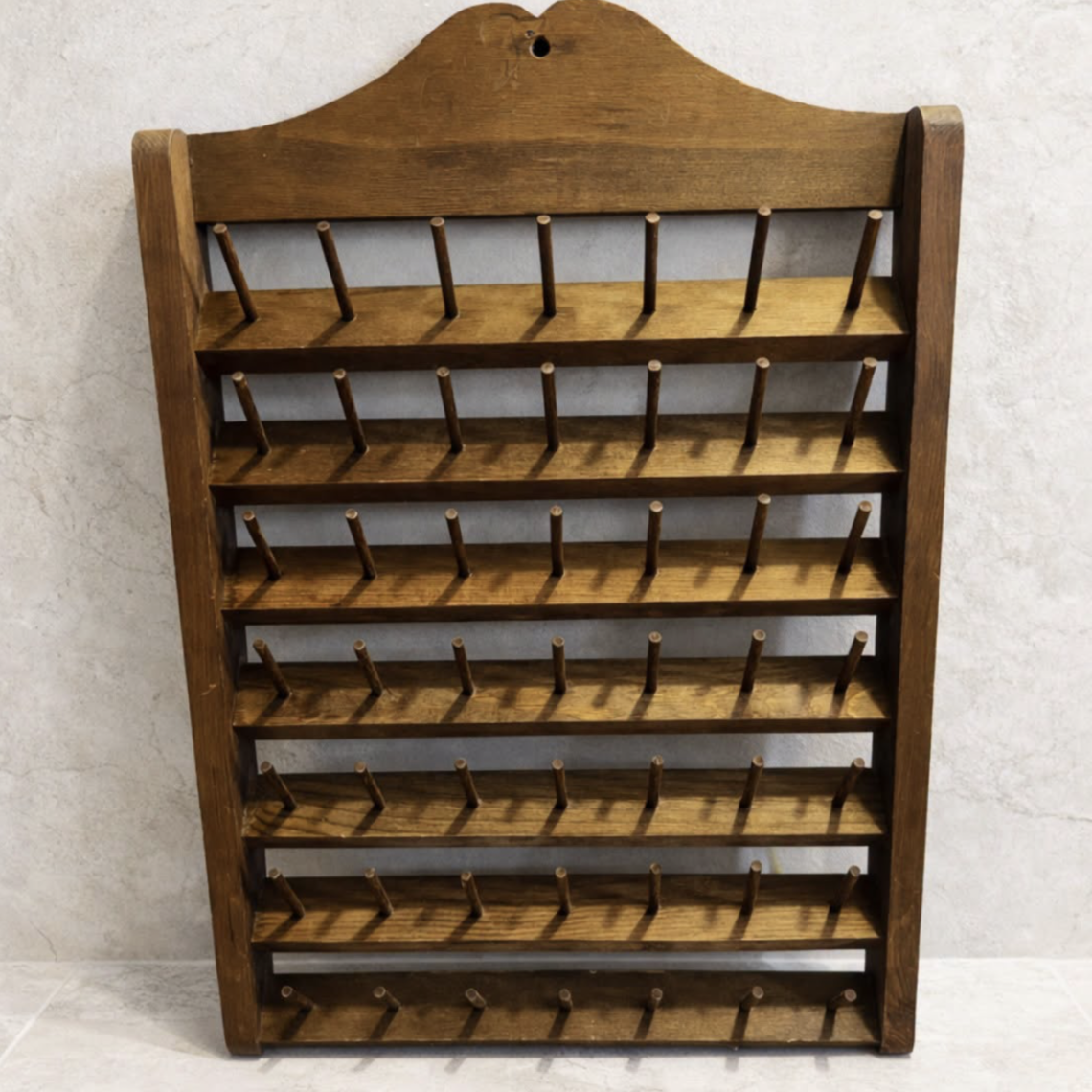
One such item is the Vintage Wooden Thread Holder, often known as a wooden thread rack, thread spool organizer, or thread spool display rack. At first glance, it may resemble a decorative wooden board covered with dozens of small pegs. Without any sewing experience, many people assume it is a kitchen utensil, a display stand, a drying rack, or even an unusual piece of wall art.
In reality, this beautifully crafted wooden rack was once an essential tool for anyone who sewed regularly. Before plastic storage containers, computerized sewing machines, and modern craft organizers became common, keeping dozens of different thread colors organized was an everyday challenge. The wooden thread holder provided a practical and elegant solution, allowing seamstresses, tailors, quilters, dressmakers, and embroidery enthusiasts to keep their sewing supplies neatly arranged, easily accessible, and protected from tangling.
Although simple in appearance, this vintage accessory reflects an era when household tools were carefully designed to combine functionality, durability, and craftsmanship.
What Is a Vintage Wooden Thread Holder?
A vintage wooden thread holder is a storage rack specifically designed to organize sewing thread.
The rack usually consists of a sturdy wooden board fitted with rows of evenly spaced wooden pegs. Each peg is designed to hold a single spool of thread, although some larger pegs can accommodate cones or specialty thread spools.
Many traditional models hold anywhere from 20 to over 100 spools, depending on their size. One particularly popular version features 49 pegs, providing space for forty-nine individual thread spools while remaining compact enough to hang on a wall.
Its simple construction allows users to see every thread color at a glance, making sewing projects much more efficient.
Why Was It Needed?
Long before digital embroidery machines and modern craft storage systems, sewing was a daily activity in many households.
People routinely repaired clothing, made curtains, created quilts, embroidered linens, altered garments, and produced children’s clothing by hand or with mechanical sewing machines.
Because different fabrics required different thread colors, serious sewists often accumulated dozens of spools over the years.
Without proper organization, thread could easily become:
- Tangled.
- Lost.
- Damaged.
- Dusty.
- Difficult to identify.
The wooden thread rack solved these problems by giving every spool its own dedicated place.
How Does It Work?
Using the rack is remarkably straightforward.
Each spool of thread slides onto its own wooden peg.
The spools remain upright, separated from one another, and easy to remove whenever needed.
Many users arrange their thread according to:
- Color.
- Thread weight.
- Brand.
- Material.
- Project type.
- Frequency of use.
This organization allows the correct thread to be located within seconds rather than searching through boxes or drawers.
Wall-Mounted Convenience
Most vintage thread holders were designed to hang on a wall.
Keeping the rack upright offered several advantages.
It:
- Saved valuable worktable space.
- Displayed thread colors clearly.
- Reduced clutter.
- Kept supplies within easy reach.
- Protected thread from being crushed inside drawers.
In many sewing rooms, the colorful spools themselves became part of the room’s decoration.
Beautiful Traditional Craftsmanship
Unlike many modern storage organizers made from plastic, vintage thread holders were almost entirely constructed from wood.
Common materials included:
- Pine.
- Oak.
- Maple.
- Beech.
- Birch.
- Poplar.
The wood was often carefully sanded and finished with varnish or natural oils to produce a smooth, durable surface capable of lasting for generations.
Some handmade versions included decorative edges, carved details, or hand-painted finishes that reflected the owner’s personal style.
Who Used Thread Holders?
These racks were commonly found in the homes and workshops of:
- Tailors.
- Seamstresses.
- Dressmakers.
- Quilters.
- Embroidery artists.
- Upholsterers.
- Costume designers.
- Home sewing enthusiasts.
Before inexpensive ready-made clothing became widely available, many families relied heavily on sewing skills to make, repair, and maintain garments.
The Importance of Organization
A sewing project often requires multiple thread colors.
For example, making a quilt might involve dozens of different shades.
Without an organized storage system, locating the correct spool could interrupt work and increase frustration.
Thread holders allowed users to quickly compare colors side by side while planning or completing projects.
Why Wood Was the Material of Choice
Wood offered numerous practical benefits.
It was:
- Strong.
- Lightweight.
- Easy to shape.
- Readily available.
- Long-lasting.
- Gentle on delicate thread.
Unlike some metal organizers, wooden pegs were less likely to scratch or damage thread spools.
Wood also blended beautifully with the handcrafted furniture commonly found in sewing rooms during earlier decades.
More Than Just Storage
Many vintage thread holders became attractive decorative pieces.
Rows of colorful thread transformed a simple wooden rack into a vibrant display that reflected the owner’s creativity and dedication to sewing.
Even today, antique thread racks are frequently displayed as rustic home décor in craft rooms, studios, and vintage-inspired interiors.
Modern Uses
Although originally designed for sewing thread, many people now use vintage thread holders for creative storage.
They can organize:
- Embroidery floss.
- Jewelry.
- Bracelets.
- Necklaces.
- Ribbons.
- Twine.
- Small craft supplies.
- Beads.
- Decorative cords.
- Miniature collectibles.
Their versatility has helped preserve their popularity even among people who do not sew regularly.
Why They Are Popular with Collectors
Collectors appreciate vintage thread holders for several reasons.
Many examples display:
- Excellent woodworking.
- Historical craftsmanship.
- Original finishes.
- Manufacturer markings.
- Rare designs.
- Exceptional durability.
Some racks originally displayed thread produced by historic manufacturers and still retain their printed advertising labels.
Complete examples with their original thread spools are particularly desirable among collectors of sewing antiques.
Caring for a Vintage Thread Holder
If you discover an old wooden thread rack, proper care can preserve its beauty for many more years.
Recommended care includes:
- Dusting regularly with a soft cloth.
- Avoiding excessive moisture.
- Cleaning gently without harsh chemicals.
- Protecting from prolonged direct sunlight.
- Preserving original finishes whenever possible.
Over-restoration can sometimes reduce the historical character of antique pieces, so gentle maintenance is often preferable.
Common Misconceptions
People unfamiliar with vintage sewing tools often mistake thread holders for:
- Spice racks.
- Key holders.
- Jewelry displays.
- Cup racks.
- Drying racks.
- Decorative wall art.
- Children’s toys.
The evenly spaced wooden pegs are the defining feature that identifies the object as a thread storage rack.
Why Vintage Sewing Tools Continue to Fascinate
Objects like wooden thread holders remind us of a time when household items were built to last for decades rather than a few years.
Every detail reflected careful craftsmanship, practical design, and an understanding of daily life.
These tools also highlight the importance sewing once held in ordinary households, where repairing and creating clothing was considered an essential life skill.
Today, they serve not only as useful organizers but also as beautiful reminders of traditional craftsmanship and the creativity of earlier generations.
Frequently Asked Questions
Can I still use a vintage thread holder today?
Yes. Most vintage thread holders remain fully functional and can store modern sewing thread just as effectively as they stored vintage spools decades ago.
Why does it have so many pegs?
Each peg is designed to hold a separate spool of thread, allowing dozens of different colors to be organized and displayed at once.
Is it valuable?
Some antique thread holders are collectible, particularly those with original finishes, manufacturer labels, or rare designs. Their value depends on factors such as age, condition, craftsmanship, and historical significance.
Why was it made from wood instead of plastic?
When these racks were first produced, wood was an affordable, durable, and widely available material. It was easy to work with, long-lasting, and complemented the handcrafted furniture commonly found in sewing rooms.

Welcome to my kitchen!
I’m a passionate home cook and recipe creator who loves turning simple ingredients into delicious, comforting meals that everyone can enjoy. Through this website, I share carefully prepared recipes, practical cooking tips, and easy-to-understand food education to help you feel more confident in the kitchen.
My goal is to make cooking simple, enjoyable, and accessible. Whether you are looking for a quick family dinner, a delicious dessert, healthy meal ideas, or traditional recipes with a modern touch, you’ll find inspiration here.
More Than Just Recipes
I believe that cooking is also a way to learn. That’s why this website is not only about recipes. I also create educational articles about ingredients, cooking techniques, kitchen tips, food preparation, and the stories behind different dishes.
Each article is designed to give you useful knowledge that you can apply in your own kitchen. From understanding how ingredients work together to learning better cooking methods, my aim is to help you become a more confident and creative cook.
My Philosophy
Good food doesn’t always require complicated ingredients or professional equipment. With a little knowledge, patience, and creativity, simple ingredients can become something truly special.
I believe in sharing recipes that are practical, clearly explained, and enjoyable to make. I also love exploring new flavors while appreciating traditional cooking and the recipes passed down through generations.
Thank you for visiting my kitchen and being part of this food-loving community. I hope my recipes and articles inspire you to cook, learn, experiment, and most importantly, enjoy every bite!
Happy cooking!