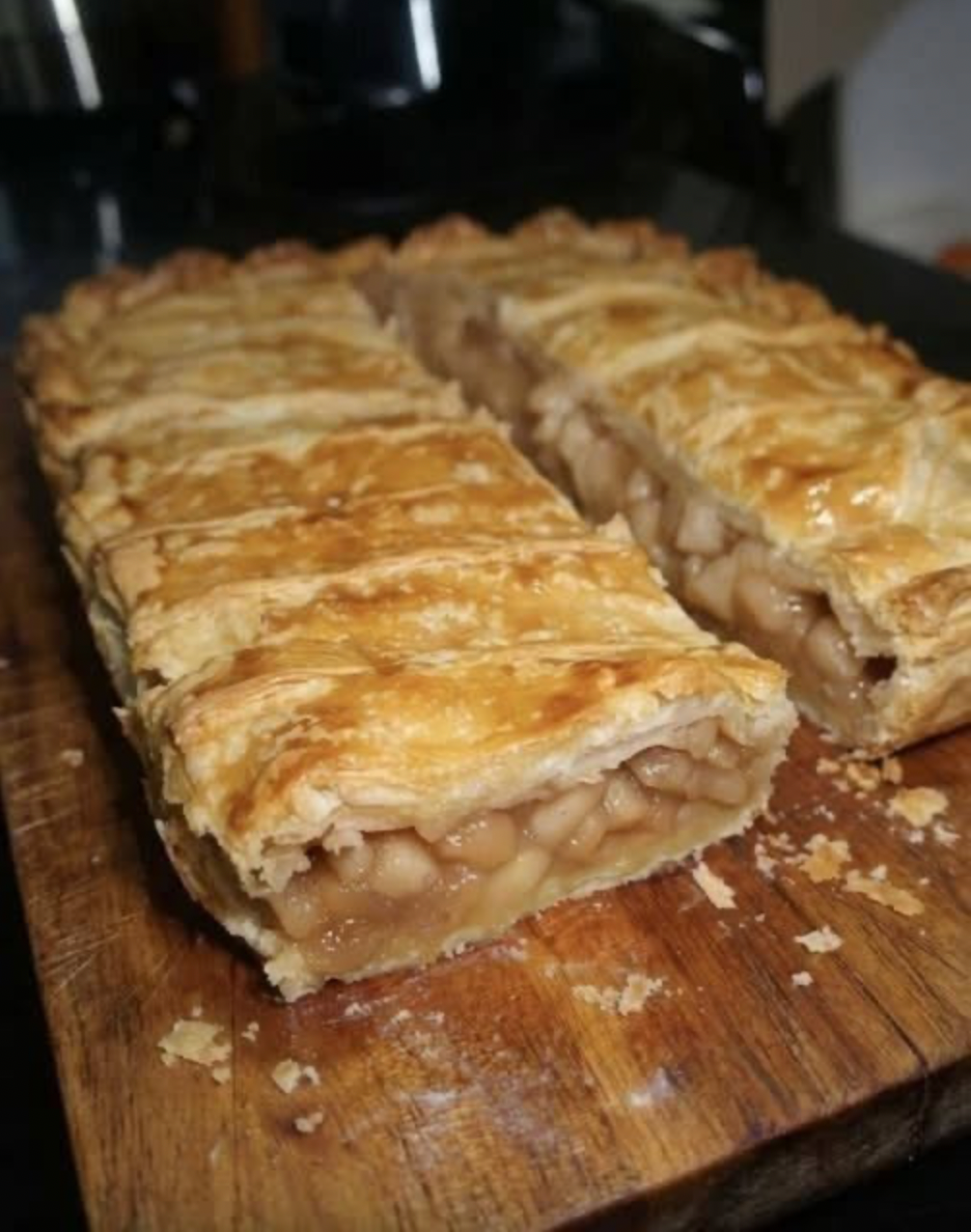
Apple strudel is more than just a dessert—it is a symbol of Central European baking tradition, deeply rooted in countries like Austria, Germany, Hungary, and parts of Eastern Europe. It is the kind of recipe that carries history inside every bite, passed down through generations in family kitchens where the scent of baked apples, cinnamon, and butter filled the air long before modern ovens and packaged ingredients existed.
“My Grandma’s Apple Strudel” is not just a recipe name—it represents a style of cooking that blends tradition, patience, and love. While classic strudel requires skillfully stretched dough so thin it becomes almost see-through, modern versions often simplify the process without losing the soul of the dish.
This version uses phyllo dough, a clever and accessible shortcut that preserves the signature flaky layers while making the recipe achievable for any home baker.
The Origins of Apple Strudel
Apple strudel, or Apfelstrudel, has a long and respected history in Central Europe. It is especially associated with Austrian cuisine, where it became popular during the time of the Habsburg Empire.
Its roots were influenced by earlier Middle Eastern pastries, particularly baklava, which also uses thin layered dough and sweet fillings. Over time, European bakers developed their own version using local ingredients like:
- apples
- cinnamon
- raisins
- nuts
- butter
- sugar
The result was a dessert that became a national treasure in Austria and a beloved treat across surrounding regions.
What Makes Apple Strudel So Special?
Apple strudel stands out because of its contrast in textures and flavors.
Each bite delivers:
- crispy, flaky layers of pastry
- soft, warm apple filling
- sweet and tart balance
- hints of cinnamon spice
- buttery richness
It is both light and indulgent at the same time.
Unlike heavy desserts, strudel feels airy and delicate, yet satisfying enough to serve as a centerpiece.
Traditional Strudel vs Modern Version
Traditional Method
In traditional baking, strudel dough is made from scratch and carefully stretched by hand until it becomes extremely thin—so thin that you can read a newspaper through it.
This requires:
- skill
- patience
- experience
- a large clean surface
The dough is then brushed with butter, filled, and carefully rolled into a long spiral.
Modern Shortcut Method
The modern version uses phyllo dough, which is already:
- paper-thin
- layered
- delicate
- crisp when baked
This eliminates the most difficult step while still maintaining the signature flaky texture.
It makes apple strudel accessible to beginners while still honoring tradition.
The Heart of the Recipe: The Apple Filling
The filling is what gives apple strudel its personality.
A classic apple strudel filling includes:
1. Apples
The best apples are:
- tart
- firm
- slightly sweet
Common choices include:
- Granny Smith
- Honeycrisp
- Braeburn
They hold their shape during baking and provide a bright contrast to the sweetness.
2. Sugar
Sugar sweetens the apples and helps create a syrupy texture as it bakes.
3. Cinnamon
Cinnamon is essential. It gives the strudel its warm, comforting aroma and classic flavor.
4. Citrus Zest
Lemon or orange zest adds brightness and balances the sweetness of the apples.
5. Raisins or Nuts (Optional)
Some traditional versions include:
- raisins soaked in rum or water
- chopped walnuts or almonds
These add texture and depth.
6. Butter
Butter enriches the filling and helps the apples caramelize during baking.
Why Phyllo Dough Works So Well
Phyllo dough is the perfect modern substitute because it:
- creates multiple crispy layers
- bakes into a golden, flaky crust
- stays light instead of heavy or doughy
- mimics the effect of hand-stretched dough
When brushed with melted butter between layers, phyllo becomes:
crisp, delicate, and beautifully golden
This gives the same satisfying crunch as traditional strudel.
Step-by-Step Process of Making Apple Strudel
Even though it looks elegant, apple strudel is surprisingly simple when broken down.
Step 1: Prepare the Apple Filling
Peel and slice apples into thin pieces.
Then mix them with:
- sugar
- cinnamon
- lemon zest
- optional raisins or nuts
Let the mixture rest so the apples release their natural juices.
Step 2: Prepare the Phyllo Layers
Lay out phyllo sheets one by one.
Each layer is brushed with melted butter to create crisp, golden layers when baked.
This step is what gives strudel its signature texture.
Step 3: Add the Filling
Place the apple mixture along one edge of the dough.
Be careful not to overfill, as this can cause tearing or leaking.
Step 4: Roll the Strudel
Gently roll the dough into a log shape.
The goal is to:
- keep it tight
- avoid breaking layers
- seal the edges properly
Step 5: Bake Until Golden
Bake until the exterior becomes:
- crisp
- golden brown
- fragrant
The smell of baked apples and cinnamon fills the kitchen during this stage.
Step 6: Cool and Serve
Let the strudel cool slightly before slicing.
It is often served with:
- powdered sugar
- whipped cream
- vanilla ice cream
- warm custard
The Texture Experience
Apple strudel is known for its contrast in textures:
- crunchy outer layers
- soft apple filling
- buttery richness
- slight chewiness from raisins (if used)
Each bite feels layered and complex despite simple ingredients.
Why This Recipe Feels Like Home
“My Grandma’s Apple Strudel” represents more than food—it represents memory.
For many families, strudel is associated with:
- holidays
- Sunday baking
- family gatherings
- special occasions
The smell alone can trigger nostalgia, even for those who did not grow up with it.
It is a dessert that feels warm, comforting, and deeply personal.
Tips for Perfect Apple Strudel
1. Don’t Overfill
Too much filling can cause leaks during baking.
2. Keep Phyllo Covered
Phyllo dries quickly. Keep unused sheets covered with a damp towel.
3. Use Enough Butter
Butter is essential for crisp layers and flavor.
4. Slice After Cooling
Cutting too early can cause the filling to spill out.
Variations of Apple Strudel
This classic dessert can be adapted in many ways.
1. Nutty Strudel
Add extra walnuts or almonds for crunch.
2. Caramel Apple Strudel
Drizzle caramel sauce into the filling for richer sweetness.
3. Berry Apple Strudel
Mix apples with blueberries or raspberries for a fruity twist.
4. Cream Cheese Strudel
Add a layer of sweetened cream cheese for richness.
Cultural Importance
Apple strudel is more than a dessert—it is part of European culinary identity.
It reflects:
- resourcefulness
- seasonal cooking
- traditional family baking
- cultural exchange across regions
Even today, it remains a symbol of hospitality and comfort.
Welcome to my kitchen!
I’m a passionate home cook and recipe creator who loves turning simple ingredients into delicious, comforting meals that everyone can enjoy. Through this website, I share carefully prepared recipes, practical cooking tips, and easy-to-understand food education to help you feel more confident in the kitchen.
My goal is to make cooking simple, enjoyable, and accessible. Whether you are looking for a quick family dinner, a delicious dessert, healthy meal ideas, or traditional recipes with a modern touch, you’ll find inspiration here.
More Than Just Recipes
I believe that cooking is also a way to learn. That’s why this website is not only about recipes. I also create educational articles about ingredients, cooking techniques, kitchen tips, food preparation, and the stories behind different dishes.
Each article is designed to give you useful knowledge that you can apply in your own kitchen. From understanding how ingredients work together to learning better cooking methods, my aim is to help you become a more confident and creative cook.
My Philosophy
Good food doesn’t always require complicated ingredients or professional equipment. With a little knowledge, patience, and creativity, simple ingredients can become something truly special.
I believe in sharing recipes that are practical, clearly explained, and enjoyable to make. I also love exploring new flavors while appreciating traditional cooking and the recipes passed down through generations.
Thank you for visiting my kitchen and being part of this food-loving community. I hope my recipes and articles inspire you to cook, learn, experiment, and most importantly, enjoy every bite!
Happy cooking!