Some recipes are more than just food — they’re memories passed down through hands, kitchens, and generations.
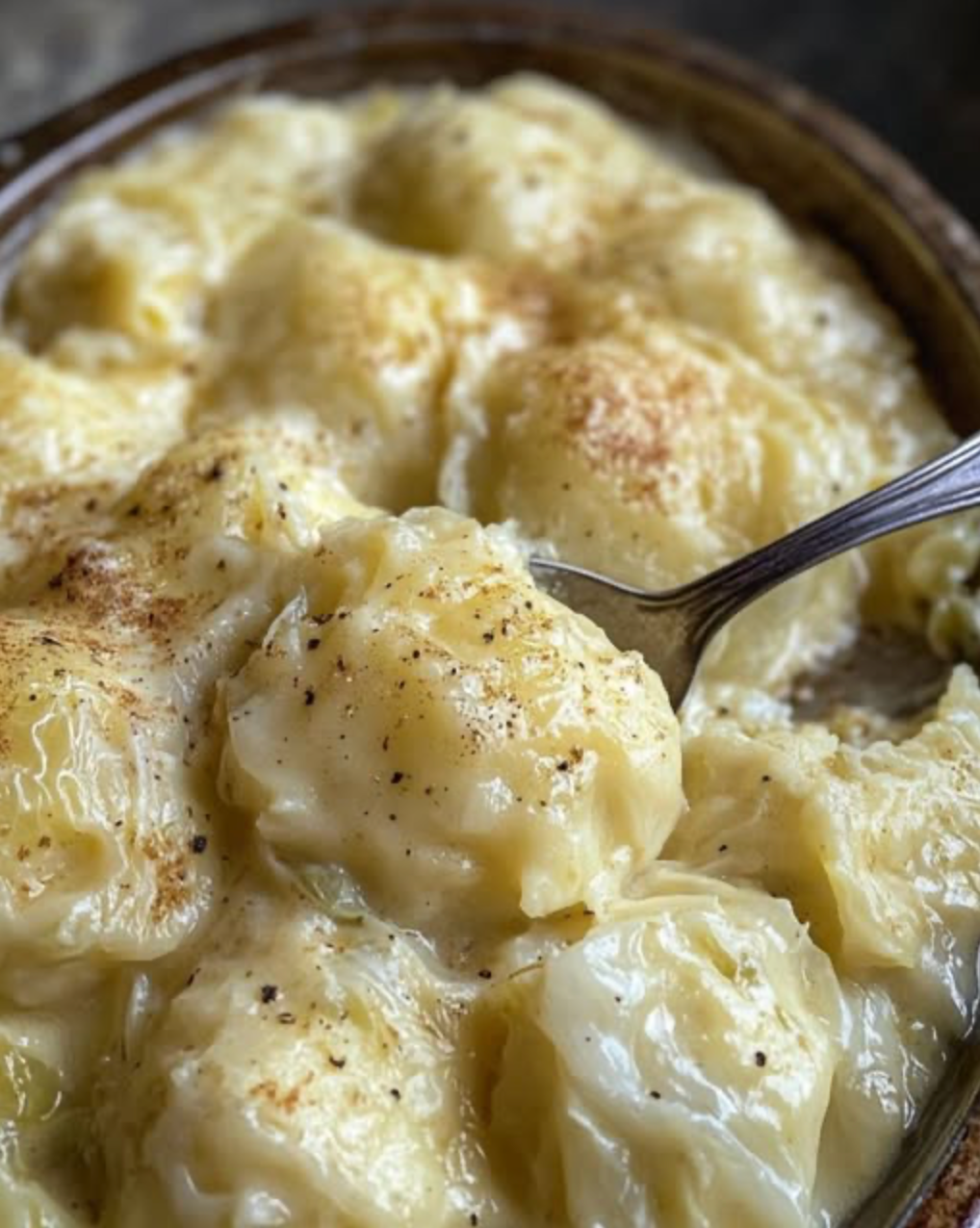
This Cabbage and Dumpling dish is one of those recipes. It’s humble and comforting, built from simple ingredients that turn magical when cooked slowly with love.
My German nana used to make this every winter, especially when the wind howled outside and the stove’s gentle simmer was the only sound that mattered. She never used a recipe — just intuition, a wooden spoon, and a heart full of care. The smell of buttery onions, steaming cabbage, and soft flour dumplings filled the house and made everything feel safe.
This dish is peasant food in the best possible way — nourishing, rich, and full of texture — the kind of meal that makes you sit back and smile after the first bite.
Ingredients (Serves 4–6)
For the Cabbage Base
1 medium head of green cabbage (about 2 lbs / 900 g)
2 tablespoons butter (plus extra for serving)
1 tablespoon vegetable oil or bacon fat (optional but adds depth)
1 large onion, finely chopped
2 garlic cloves, minced (optional, not always traditional but delicious)
1 teaspoon salt (or to taste)
½ teaspoon black pepper
½ teaspoon caraway seeds (traditional German flavor, optional but authentic)
1 cup vegetable broth or chicken stock
1 tablespoon apple cider vinegar (adds brightness and balance)
For the Dumplings (Klöße or Drop Dumplings)
1½ cups all-purpose flour
2 teaspoons baking powder
½ teaspoon salt
2 tablespoons melted butter
2 large eggs
½ cup milk (or as needed)
These are simple flour-based dumplings, light yet hearty, designed to soak up the cabbage juices beautifully.
Optional Add-ins (for variations)
4–6 slices bacon or smoked sausage, chopped and browned
½ teaspoon paprika for warmth
A handful of chopped parsley or chives for color and freshness
Instructions
Step 1: Prepare the Cabbage
Remove any wilted outer leaves from the cabbage.
Cut it into quarters, remove the tough core, then slice it thinly (like thick ribbons).
Rinse under cold water and drain well.
Tip: You can also use savoy cabbage for a softer texture and a slightly sweeter taste.
Step 2: Sauté the Onions and Cabbage
In a large pot or deep skillet, melt the butter and oil (or bacon fat) over medium heat.
Add the onions and sauté until they turn translucent and start to caramelize slightly — about 5–7 minutes.
Add the garlic (if using) and stir for 30 seconds, just until fragrant.
Add the sliced cabbage, salt, pepper, and caraway seeds.
Stir well and let the cabbage wilt for 8–10 minutes, stirring occasionally.
It should reduce in volume and start to turn soft and glossy.
Pour in the broth and apple cider vinegar, then cover the pot.
Let it simmer gently on low heat for about 20 minutes, until the cabbage is tender and fragrant.
Step 3: Prepare the Dumpling Batter
While the cabbage cooks, make the dumplings:
In a large bowl, whisk together flour, baking powder, and salt.
In another bowl, mix eggs, melted butter, and milk.
Gradually add the wet ingredients to the dry, stirring gently until a soft, sticky dough forms.
The consistency should be thicker than pancake batter but soft enough to drop from a spoon.
If it’s too thick, add a splash more milk; if too thin, sprinkle in a little flour.
Step 4: Cook the Dumplings in the Cabbage
Once the cabbage is tender and simmering gently, use a tablespoon to drop spoonfuls of dumpling dough directly onto the surface of the bubbling cabbage mixture.
Cover the pot tightly with a lid and reduce heat to low.
Let it steam for 15–18 minutes without lifting the lid (very important — lifting releases the steam and can make the dumplings dense).
After 18 minutes, check one dumpling: it should be puffed up and cooked through (no raw dough inside).
Step 5: Serve and Enjoy
Gently stir the cabbage and dumplings together to coat everything with the buttery juices.
Taste and adjust seasoning — add more salt, pepper, or a pat of butter for richness.
Serve warm, in big comforting bowls, with a sprinkle of fresh parsley or a spoon of sour cream on top.
You can also drizzle with melted butter and a pinch of paprika before serving — it looks beautiful and adds flavor.
Optional Meat Variation
If your nana liked a heartier version, you can add:
Fried bacon or sausage: Cook it first, set aside, then add back in with the cabbage.
Leftover roast pork or ham: Stir into the cabbage mixture before adding the dumplings.
Beef broth instead of vegetable broth for a richer, deeper taste.
This variation turns it into a full, one-pot meal that’s perfect for Sunday lunch.
Storage and Reheating
Store leftovers in an airtight container in the refrigerator for up to 3 days.
Reheat gently in a covered skillet or saucepan with a splash of broth or water to keep it moist.
The dumplings tend to soak up liquid overnight — you can add a bit of butter or cream while reheating to restore the creamy texture.
Chef’s Notes
Don’t skip the vinegar — it brightens the flavor and balances the richness.
Caraway seeds are traditional in many German cabbage dishes — they help with digestion and add that distinct old-world aroma.
For extra creaminess, stir in a tablespoon of sour cream or crème fraîche just before serving.
You can make the dumplings smaller for a lighter texture, or larger and denser like traditional Bavarian Klöße.
In Summary
This German Cabbage and Dumpling Dish isn’t just food — it’s comfort in a bowl.
The tender cabbage melts into a buttery broth, the dumplings soak up every bit of flavor, and the smell fills your home with warmth and nostalgia.
It’s the kind of meal that reminds you of simpler days — where a simmering pot meant care, connection, and love. Every bite tells a story — of your nana’s kitchen, of generations that found joy in simplicity, and of how the humblest ingredients can create something extraordinary.