A Complete, In-Depth Guide to Spotting Spoiled Watermelon and Staying Safe
Watermelon is one of the most refreshing fruits you can eat—hydrating, naturally sweet, and perfect for warm days. But because it contains so much water and natural sugar, it is also highly perishable. When it goes bad, it can change quickly, sometimes in ways that are not immediately obvious.
Knowing how to recognize the warning signs of spoiled watermelon is important not just for taste, but for your health. Eating bad fruit can lead to digestive discomfort and, in some cases, foodborne illness.
This guide will walk you through every major sign of spoilage, explain why it happens, and help you confidently decide when to keep or toss your watermelon.
Why Watermelon Spoils Quickly
Watermelon is made up of over 90% water. That high moisture level creates an environment where:
- Bacteria can grow easily
- Sugars ferment quickly
- Texture breaks down rapidly
Once the protective rind is cut, the process speeds up even more.
The First Rule: Trust Your Senses
Your senses are your best tools:
- Sight
- Smell
- Touch
- Taste (only if everything else seems safe)
If something feels off, it usually is.
Warning Sign #1: Sour or Unusual Smell
Fresh watermelon should smell:
- Light
- Sweet
- Clean
Signs of Spoilage
- Sour odor
- Vinegar-like smell
- Fermented or alcoholic scent
What It Means
The sugars inside the fruit have begun to ferment due to bacterial activity.
Action
If it smells even slightly sour, do not eat it.
Warning Sign #2: Slimy or Sticky Texture
When you touch fresh watermelon, it should feel:
- Firm
- Slightly crisp
- Juicy but not slippery
Bad Signs
- Slimy surface
- Sticky residue
- Mushy flesh
What’s Happening
Breakdown of cell structure and bacterial growth create this texture.
Action
Discard immediately.
Warning Sign #3: Color Changes
Fresh watermelon has:
- Bright red or pink flesh
- Even coloration
Spoilage Indicators
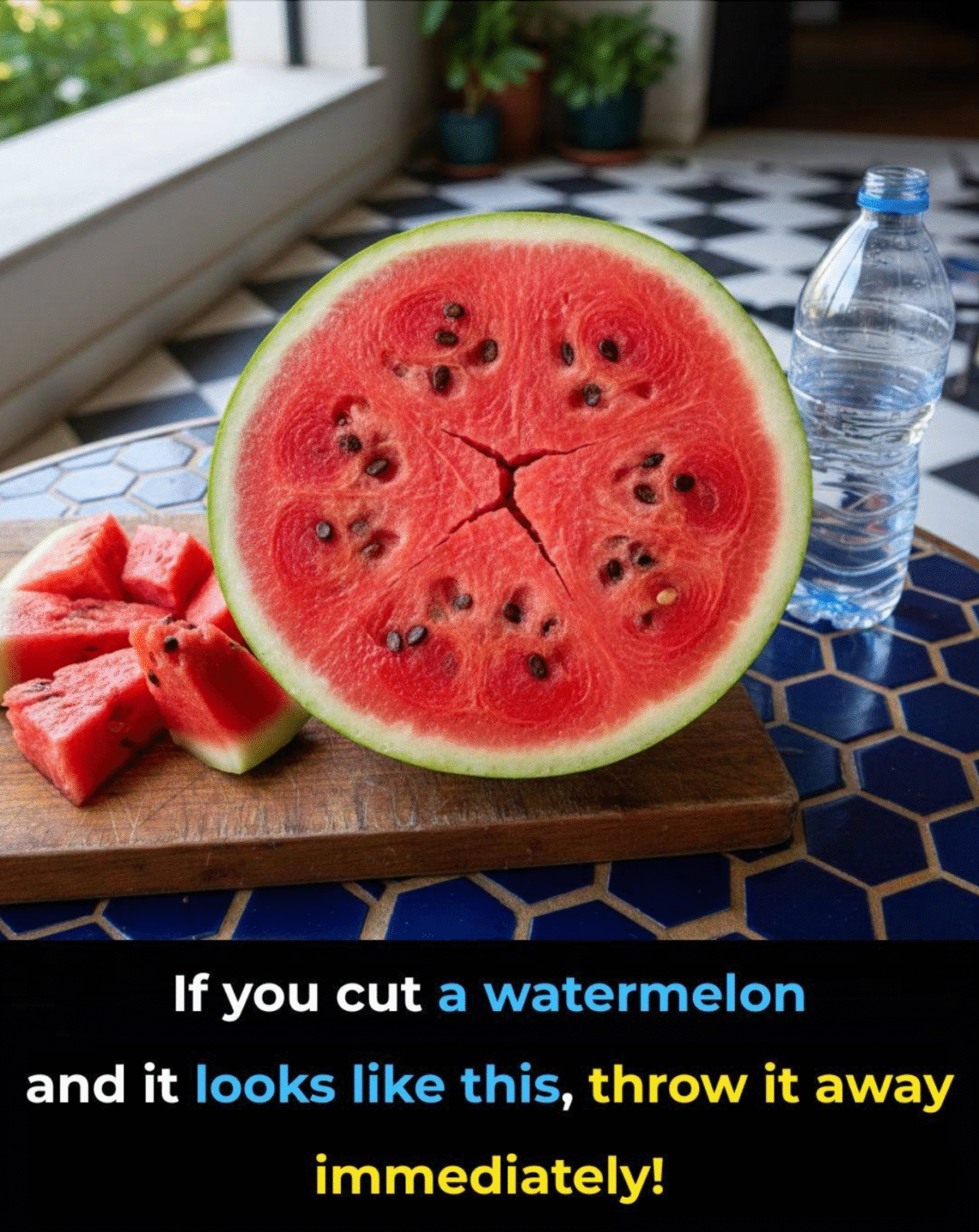
- Dark spots
- Brown or dull areas
- Translucent or overly soft sections
What It Means
The fruit is breaking down or has begun to rot.
Warning Sign #4: Mold Growth
This is one of the most obvious and serious signs.
What to Look For
- White, green, or black fuzzy patches
- Spots on the flesh or rind
Important Note
Even if mold is only visible in one area, it can spread invisibly.
Action
Do not cut around it—throw the whole watermelon away.
Warning Sign #5: Bubbling or Foaming
This is less common but very important.
Signs
- Small bubbles in the flesh
- Foam-like texture
- Slight fizzing sensation
What It Means
Active fermentation is occurring.
Action
Discard immediately—this is not safe to eat.
Warning Sign #6: Overly Soft or Grainy Texture
Fresh watermelon should be:
- Crisp
- Firm
Bad Texture
- Mealy or grainy
- Too soft
- Falling apart easily
Cause
Cell walls have broken down due to age or improper storage.
Warning Sign #7: Hollow or Dry Pockets
Sometimes spoiled watermelon develops:
- Dry sections
- Hollow areas inside
Meaning
Moisture has redistributed unevenly, often due to age or internal breakdown.
Warning Sign #8: Bitter or Strange Taste
If everything looks fine but tastes off:
- Bitter
- Sour
- Fermented
Action
Spit it out and discard the rest.
Never ignore unusual taste.
Whole Watermelon vs Cut Watermelon
Whole Watermelon
Usually lasts longer due to protective rind.
Watch For
- Soft spots on rind
- Cracks or leaks
- Unusual odor
Cut Watermelon
Spoils much faster.
Shelf Life
- Typically 3–5 days in the fridge
After that, risk increases significantly.
Proper Storage to Extend Freshness
For Whole Watermelon
- Store in a cool place
- Refrigerate after cutting
For Cut Watermelon
- Keep in airtight container
- Refrigerate immediately
- Avoid leaving at room temperature
Why Eating Spoiled Watermelon Is Risky
Spoiled fruit can contain:
- Harmful bacteria
- Fermentation byproducts
Possible Effects
- Stomach discomfort
- Nausea
- Digestive upset
In some cases, more serious foodborne illness can occur.
Common Misconceptions
“It’s Just a Little Soft”
Softness can indicate early spoilage.
“I Can Cut Around the Bad Part”
Not safe, especially with mold or fermentation.
“If It Looks Fine, It’s Safe”
Always check smell and texture too.
Quick Checklist Before Eating
Ask yourself:
- Does it smell fresh?
- Is the texture firm and clean?
- Is the color bright and natural?
- Is there any slime, mold, or bubbling?
If the answer to any is no, it’s safer to discard it.