A Classic, Elegant, and Incredibly Smooth Version of a Timeless Appetizer
Deviled eggs are one of those recipes that feel both nostalgic and refined at the same time. They show up at spring gatherings, family dinners, holiday tables, and casual parties, yet they always carry a sense of care and attention. Martha Stewart’s approach to deviled eggs emphasizes balance, smooth texture, and a clean, elegant presentation. The filling is creamy and velvety, with gentle richness from mayonnaise, subtle tang from mustard and vinegar, and a light, savory depth that never overwhelms the delicate flavor of the eggs themselves.
This recipe focuses not only on ingredients, but on method, because the difference between average deviled eggs and exceptional deviled eggs is often found in the texture of the yolks, the precision of seasoning, and the way the filling is mixed and piped.
Ingredients
For twelve deviled egg halves (six whole eggs):
• 6 large eggs
• 3 to 4 tablespoons mayonnaise (preferably full-fat for a smooth texture)
• 1 to 1½ teaspoons Dijon mustard
• 1 teaspoon white vinegar or apple cider vinegar
• Salt, to taste
• Freshly ground black pepper, to taste
• Optional: a very small pinch of sugar to balance acidity
• Optional garnish: paprika, finely chopped chives, dill, or parsley
The ingredient quantities can be adjusted slightly depending on how creamy or tangy you prefer the filling. Martha’s style leans toward smooth, refined, and gently seasoned rather than overly sharp or heavy.
Step 1 — Boiling the Eggs Properly
Perfect deviled eggs begin with perfectly cooked eggs. The yolks should be fully cooked but not dry or gray around the edges. To achieve this result:
Place the eggs in a single layer in a saucepan.
Cover them with cool water, ensuring the water rises at least one inch above the eggs.
Set the pot over medium-high heat and bring the water just to a steady boil.
Once boiling, turn off the heat, cover the pot, and let the eggs sit in the hot water for about 10 to 12 minutes.
This gentle cooking method helps prevent the yolks from becoming chalky and keeps the whites tender and smooth.
When the time is up, immediately transfer the eggs to a bowl of ice water. Let them cool for at least ten minutes. The rapid cooling helps the shells release more easily and prevents overcooking.
Step 2 — Peeling the Eggs Cleanly
Carefully tap each egg on a flat surface to crack the shell, then peel under running water if needed. Begin peeling from the wider end, where a natural air pocket usually sits beneath the shell. Aim to keep the surface of the whites smooth and intact, since appearance matters in this style of presentation.
Once peeled, gently pat the eggs dry with a clean towel.
Step 3 — Halving and Preparing the Yolks
Using a sharp knife, slice each egg lengthwise from top to bottom. Carefully remove the yolks and place them in a separate mixing bowl. Set the whites on a tray or plate, open-side upward.
Before adding the other ingredients, break up the yolks with a fork and mash them thoroughly until they become very fine and crumb-like. The smoother the yolk base, the creamier the final filling will be. Some cooks even press the yolks through a fine sieve for an ultra-silky texture, which is very much in line with Martha Stewart’s refined preparation style.
Step 4 — Creating the Creamy Filling
To the mashed yolks, add:
• The mayonnaise
• The Dijon mustard
• The vinegar
• A light pinch of salt
• A small amount of black pepper
Mix slowly at first, then cream the mixture together until it becomes smooth and cohesive. The goal is a filling that is neither stiff nor runny, but gently plush and spreadable with a soft sheen.
Taste the mixture and adjust the seasoning. If you prefer a slightly brighter flavor, add a small additional drop of vinegar or mustard. If the mixture feels too dense, stir in a little more mayonnaise. If desired, a tiny pinch of sugar can round out acidity without making the filling sweet.
The hallmark of Martha Stewart’s style is restraint: the filling should taste like enhanced egg, not like mayonnaise or mustard alone.
Step 5 — Filling the Egg Whites
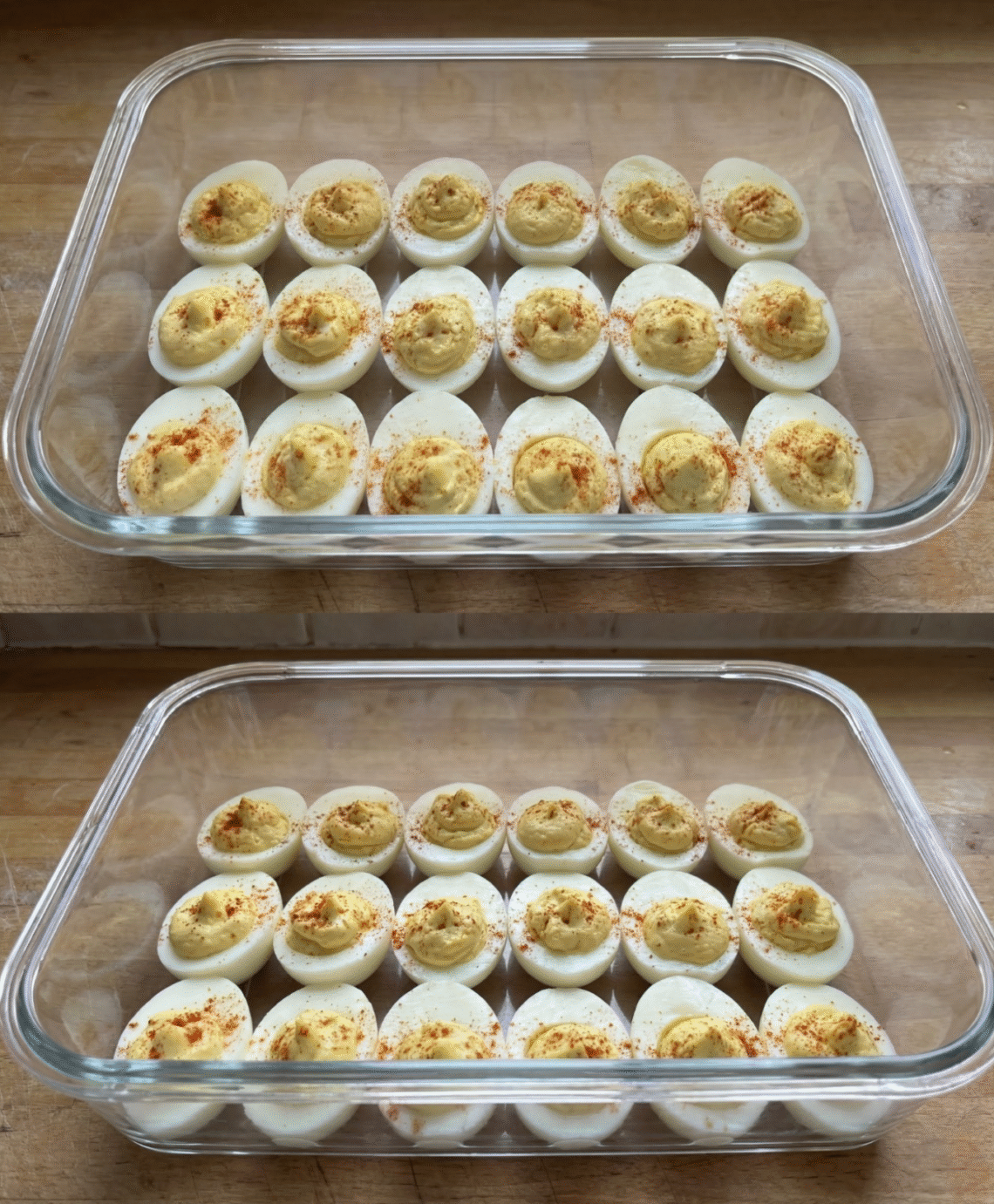
You may spoon the filling into the whites, but for a more polished, bakery-style finish, transfer the mixture into a piping bag or a plastic bag with the corner snipped. Pipe the filling into each egg half in a neat, slightly domed swirl.
A consistent, tidy presentation is part of what makes this recipe feel refined and classic.
Step 6 — Garnishing with Subtlety
Traditional deviled eggs are often finished with a light dusting of paprika. In Martha’s approach, garnish is understated and purposeful, never heavy-handed. You may choose one of the following:
• A faint sprinkle of paprika for color and warmth
• A few very fine chive slices for a fresh, green note
• A tiny leaf or fragment of dill or parsley for elegance
The garnish should accent the eggs rather than distract from them.
Serving Notes
Serve deviled eggs well-chilled or cool room temperature. They pair beautifully with salads, roasted meats, sandwiches, holiday spreads, and buffet-style gatherings. Because they are small, delicate, and bite-friendly, they function as both appetizer and comfort food.
Storage and Make-Ahead Guidance
Deviled eggs can be made several hours in advance and refrigerated until serving. For best texture, store the egg whites and the filling separately if preparing far ahead, then fill them shortly before presentation. Once assembled, store them covered in the refrigerator and consume within one to two days for best quality and food safety.
Avoid leaving deviled eggs out at warm room temperature for extended periods, especially during parties or outdoor gatherings.
Optional Variations Inspired by Martha Stewart’s Style
While the classic version is elegant on its own, variations can be created while still maintaining refinement:
• A small amount of finely minced cornichon or caper for gentle acidity
• A touch of crème fraîche mixed with the mayonnaise for extra silkiness
• A very small amount of finely minced fresh herb for aromatic depth
Each change should be subtle, thoughtful, and balanced.
Final Thoughts
Martha Stewart’s creamy deviled eggs are about more than just a simple appetizer. They reflect the idea that even the most familiar foods can be elevated through careful preparation, attention to texture, and respect for small details. The result is a dish that feels classic, graceful, and satisfying, with smooth filling, clean flavor, and understated elegance.