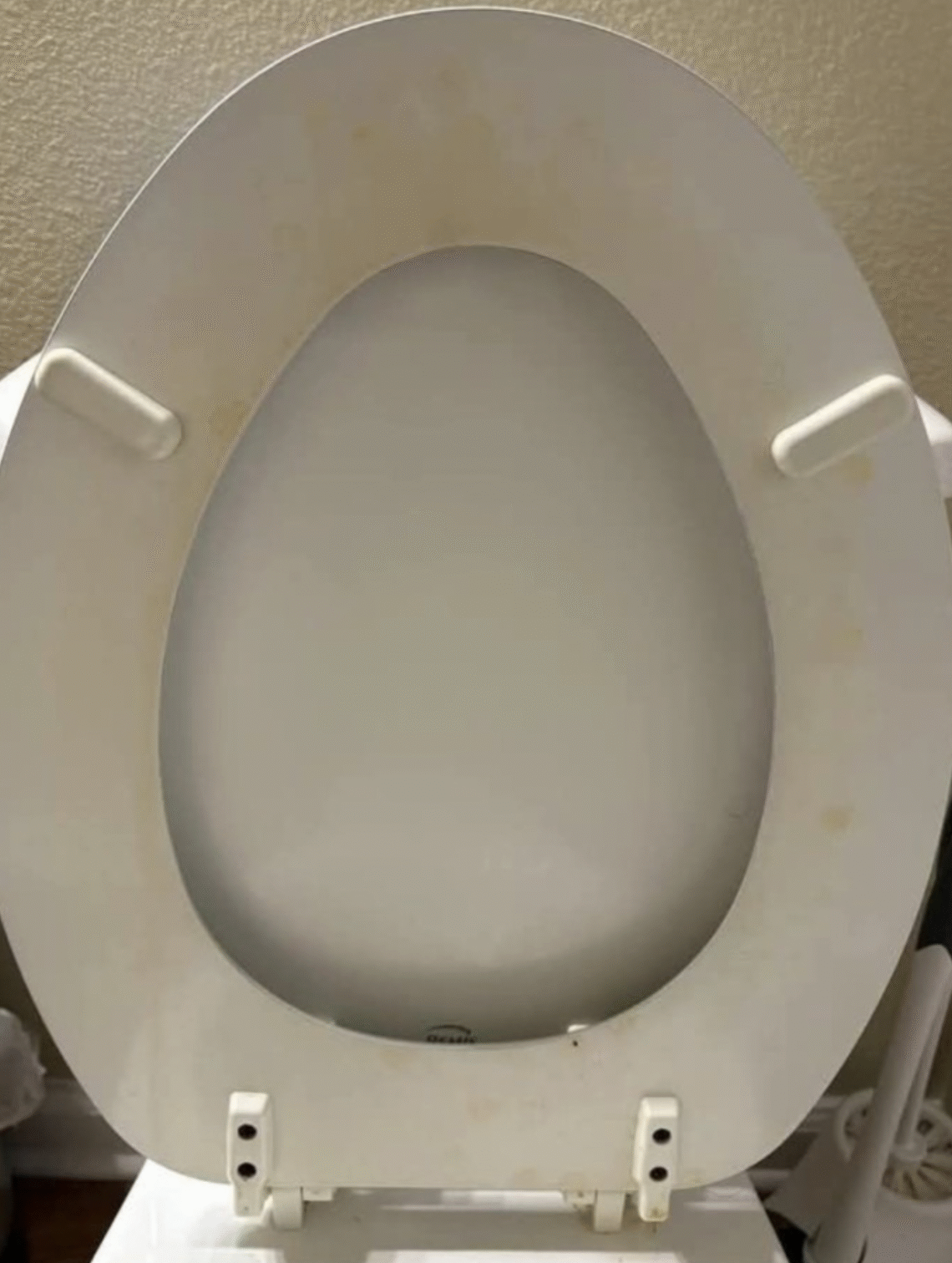
For the longest time, my toilet looked clean—at least at first glance. The seat was spotless, the floor was scrubbed, and the bathroom smelled fresh. But there it was, impossible to ignore once you noticed it: that stubborn yellow ring inside the bowl. No matter how often I flushed or how much regular cleaner I used, the stain stayed put. It wasn’t dramatic, but it was persistent, and somehow that made it more frustrating.
If you’ve ever dealt with yellow toilet stains, you know they have a way of making a clean bathroom feel unfinished.
This is how I finally removed them—and why it worked.
Understanding What Those Yellow Stains Really Are
Before fixing the problem, it helps to understand it.
Yellow stains in toilet bowls are usually caused by mineral buildup, not dirt. In most cases, they come from:
- Hard water rich in iron, calcium, or magnesium
- Urine residue that wasn’t fully flushed away
- Limescale that traps discoloration over time
These minerals slowly bond to the porcelain, creating stains that ordinary toilet cleaners can’t dissolve. That’s why scrubbing alone often does nothing—you’re fighting chemistry, not grime.
Why Regular Cleaning Products Often Fail
Most standard toilet cleaners are designed for surface cleaning and odor control, not mineral removal. They may bleach the surface slightly, but they don’t break down the hardened deposits clinging to the bowl.
That’s why:
- The stain fades slightly, then comes back
- Scrubbing harder doesn’t help
- The bowl feels smooth, yet still looks dirty
Once I realized this, I stopped wasting time and elbow grease and changed my approach.
What Actually Worked (And Why)
The key to removing yellow stains is using acidic agents that dissolve mineral buildup. You don’t need harsh industrial chemicals—just the right combination and enough time.
Method 1: Vinegar and Baking Soda (Best Overall)
This was the method that finally solved the problem.
What You Need
- White vinegar
- Baking soda
- Toilet brush
- Rubber gloves
Step-by-Step Process
- Lower the water level
Flush the toilet, then turn off the water valve and flush again to remove most of the water from the bowl. This exposes the stains directly. - Pour vinegar generously
Pour white vinegar directly onto the yellow stains, making sure they are fully soaked. - Let it sit
Leave the vinegar for at least 1–2 hours. For heavy stains, overnight works even better. This gives the acid time to break down mineral deposits. - Add baking soda
Sprinkle baking soda over the vinegar-soaked areas. It will fizz slightly—this reaction helps loosen stubborn buildup. - Scrub gently
Use a toilet brush and scrub in circular motions. You’ll notice the stains lifting much more easily than before. - Flush and inspect
Turn the water back on, flush, and check the result. In most cases, the stains are gone or significantly lighter after one round.
Method 2: Vinegar Soak for Severe Stains
For stains that had been there for years, I needed extra patience.
- Soak paper towels in vinegar
- Press them directly against the stained areas
- Leave them in place overnight
This keeps the vinegar in constant contact with the stain instead of letting it dilute in water.
The next morning, the stains scrubbed away with minimal effort.
Method 3: Pumice Stone (Use With Caution)
For extremely stubborn mineral stains, a wet pumice stone can help—but only if used correctly.
Important rules:
- Always keep the stone and surface wet
- Use light pressure
- Never use on dry porcelain
This method works by gently scraping away mineral buildup without scratching, but it should be a last resort, not a regular habit.
What I Avoided (And You Should Too)
Some methods do more harm than good.
Avoid:
- Metal brushes or steel wool (they scratch porcelain)
- Mixing vinegar and bleach (dangerous fumes)
- Abrasive powders used aggressively
Scratches make future stains worse by giving minerals more places to cling.
Preventing Yellow Stains From Coming Back
Once the stains were gone, I focused on keeping them away.
Simple Maintenance Habits
- Pour vinegar into the bowl once a week and let it sit for 30 minutes
- Flush regularly to prevent urine buildup
- Clean lightly but consistently instead of waiting months
If you live in a hard-water area, prevention is just as important as cleaning.
The Result: A Toilet That Actually Looks Clean
After using the right method, the difference was immediate. The porcelain looked bright again—not artificially white, but genuinely clean. More importantly, the stains didn’t come back quickly like before.
There’s something deeply satisfying about solving a problem that’s been quietly annoying you for years. It wasn’t about perfection—it was about finally understanding what the stain was and treating it properly.
Final Thoughts
Yellow toilet stains aren’t a sign of poor hygiene. They’re a chemical reality, especially in hard-water areas. Once you stop fighting them with the wrong tools and start using the right approach, they become manageable—even easy.