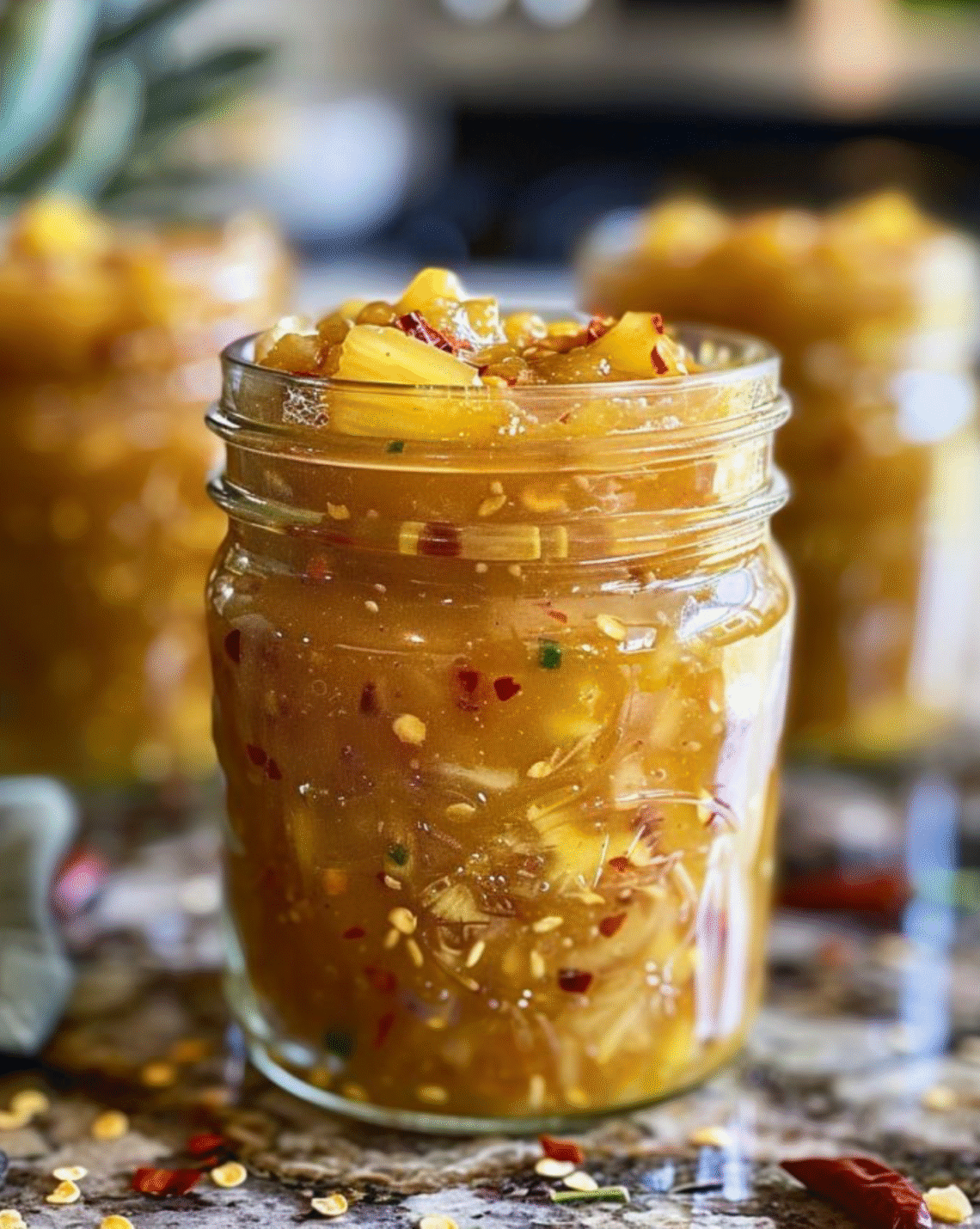
There is something uniquely satisfying about a sauce that manages to balance sweetness, heat, tang, and fruitiness all at the same time. Sweet chili sauces are already beloved for their glossy texture and gentle kick, but when you add pineapple, everything changes. Suddenly, the sauce becomes brighter, more vibrant, more layered, and far more aromatic. The natural sugars in the pineapple caramelize beautifully during cooking, while the fruit’s acidity balances the heat from the chili peppers. The final result is a thick, shimmering sauce that feels refreshing yet bold—perfect for dipping, glazing, marinating, or drizzling over everything from grilled chicken to spring rolls.
This is a complete, detailed recipe that explains each step, why it matters, and how to get the deepest flavor possible.
Ingredients
• 2 cups finely chopped fresh pineapple (or high-quality canned pineapple in juice, well drained)
• 1 cup pineapple juice (from fresh juicing or canned juice)
• 1 cup water
• 3 to 4 tablespoons rice vinegar or white vinegar
• 1/2 to 3/4 cup granulated sugar (adjust based on desired sweetness)
• 2 to 3 tablespoons honey or maple syrup (optional but adds richness)
• 4 to 6 cloves garlic, minced very finely
• 1 tablespoon fresh ginger, grated
• 1 to 2 tablespoons red chili flakes, depending on desired heat
• 1 small red chili pepper, finely chopped (optional for added color and spice)
• 2 tablespoons soy sauce or fish sauce (adds savory depth)
• 1 teaspoon salt, or more to taste
• 1 tablespoon cornstarch mixed with 2 tablespoons cold water (for thickening)
• Optional: juice of half a lime for brightness
• Optional: zest of one lime for aroma
Instructions
1. Prepare the Pineapple
If using fresh pineapple, make sure it is ripe, juicy, and sweet. Cut it into very small pieces—almost like a coarse relish—because smaller chunks break down more easily and release more flavor during simmering. Fresh pineapple will give a brighter and more complex flavor, while canned pineapple will offer a smoother sweetness. Either works, but make sure to drain canned pineapple well so the sauce does not become too watery.
2. Build the Base of the Sauce
In a medium saucepan, combine the chopped pineapple, pineapple juice, water, sugar, garlic, ginger, chili flakes, chopped chili pepper, vinegar, soy sauce or fish sauce, and salt. Stir everything together thoroughly. At this point, you already have the foundation of your sauce—the sweet fruit, the heat, the acidity, and the savory base are all in the pot.
3. Begin Simmering
Place the saucepan over medium heat and bring the mixture to a steady simmer. As it heats, you will begin to smell the pineapple’s sweetness merging with the garlic and ginger. Allow the mixture to simmer gently, stirring occasionally to prevent sticking. This step can take 10 to 15 minutes. The goal is to soften the pineapple, marry the flavors, and reduce the liquid slightly for a fuller taste.
4. Mash for Texture
As the mixture simmers, you can gently mash some of the pineapple pieces with a wooden spoon or a potato masher. You do not want to puree everything; instead, aim for a mix of small softened fruit pieces and a slightly thick sauce. This creates a more interesting mouthfeel and ensures the sauce clings well to food.
5. Adjust Sweetness, Heat, or Acidity
Taste the sauce as it simmers. If it needs more sweetness, add a bit more sugar or a tablespoon of honey. If you want more heat, sprinkle in additional chili flakes. If the sauce feels too sweet or heavy, add a teaspoon or two more vinegar for balance. Fine-tuning at this stage helps create a perfectly harmonious sauce.
6. Thicken the Sauce
Once the pineapple is soft and the flavors are integrated, add your cornstarch slurry. Stir continuously as you drizzle the slurry into the simmering liquid. Within 30 to 60 seconds, the sauce will thicken noticeably. If you prefer a thicker, glaze-like consistency, you can add a little more slurry—but do it gradually. Over-thickening can make the sauce heavy. You want it glossy, smooth, and just thick enough to cling to food without being sticky or gelatinous.
7. Add Final Touches
If desired, squeeze in a bit of lime juice and stir in the lime zest. These finishing touches brighten the sauce and enhance the tropical aroma. This is especially recommended if you are serving the sauce with seafood, grilled meats, or fresh spring rolls.
8. Cool and Store
Remove the saucepan from the heat and allow the sauce to cool slightly. As it sits, it will thicken even more. Once cooled, transfer it to a clean glass jar or airtight container. The sauce can be refrigerated for up to one week. For longer storage, you can freeze it in small portions.
Detailed Tips and Notes
• Choosing the Sweetness Level:
Pineapple naturally varies in sweetness. Always taste before adjusting the sugar. If using canned pineapple in heavy syrup, reduce the added sugar significantly.
• Choosing the Heat Level:
Red chili flakes offer predictable, even heat. Fresh chili gives bursts of heat and added aroma. You can also use Thai chilis for a sharper, more piercing spice level.
• Vinegar Matters:
Rice vinegar is smoother and more floral, while white vinegar brings a sharper, brighter acidity. Either works, depending on your preference.
• Soy Sauce vs. Fish Sauce:
Soy sauce adds a mild savory depth and a darker color. Fish sauce adds a stronger umami and a more Southeast-Asian profile. Using just a small amount is enough.
• Texture Control:
If you prefer a smoother sauce, you can blend half of the mixture with an immersion blender before thickening it. If you want it chunkier, do not mash the pineapple too much.
How to Use Sweet Chili Pineapple Sauce
This sauce is incredibly versatile. Here are some ways to enjoy it:
• Glaze for grilled chicken, pork, salmon, or shrimp
• Dipping sauce for chicken tenders, fried shrimp, wontons, or spring rolls
• Drizzle for stir-fry dishes
• Marinade base for grilled meats
• Sweet–spicy topping for burgers
• Sauce for roasted vegetables or baked tofu
• Spread for sandwiches or wraps
• Finishing drizzle on rice bowls
Variations
• Garlic Lovers’ Version: Add extra garlic and simmer slightly longer.
• Super Hot Version: Add chopped habanero or Thai chili.
• Smoky Version: Add a teaspoon of smoked paprika or chipotle powder.
• Mango-Pineapple Fusion: Replace half the pineapple with chopped ripe mango.
• Ginger-Heavy Version: Double the ginger for a sharper, warmer flavor.