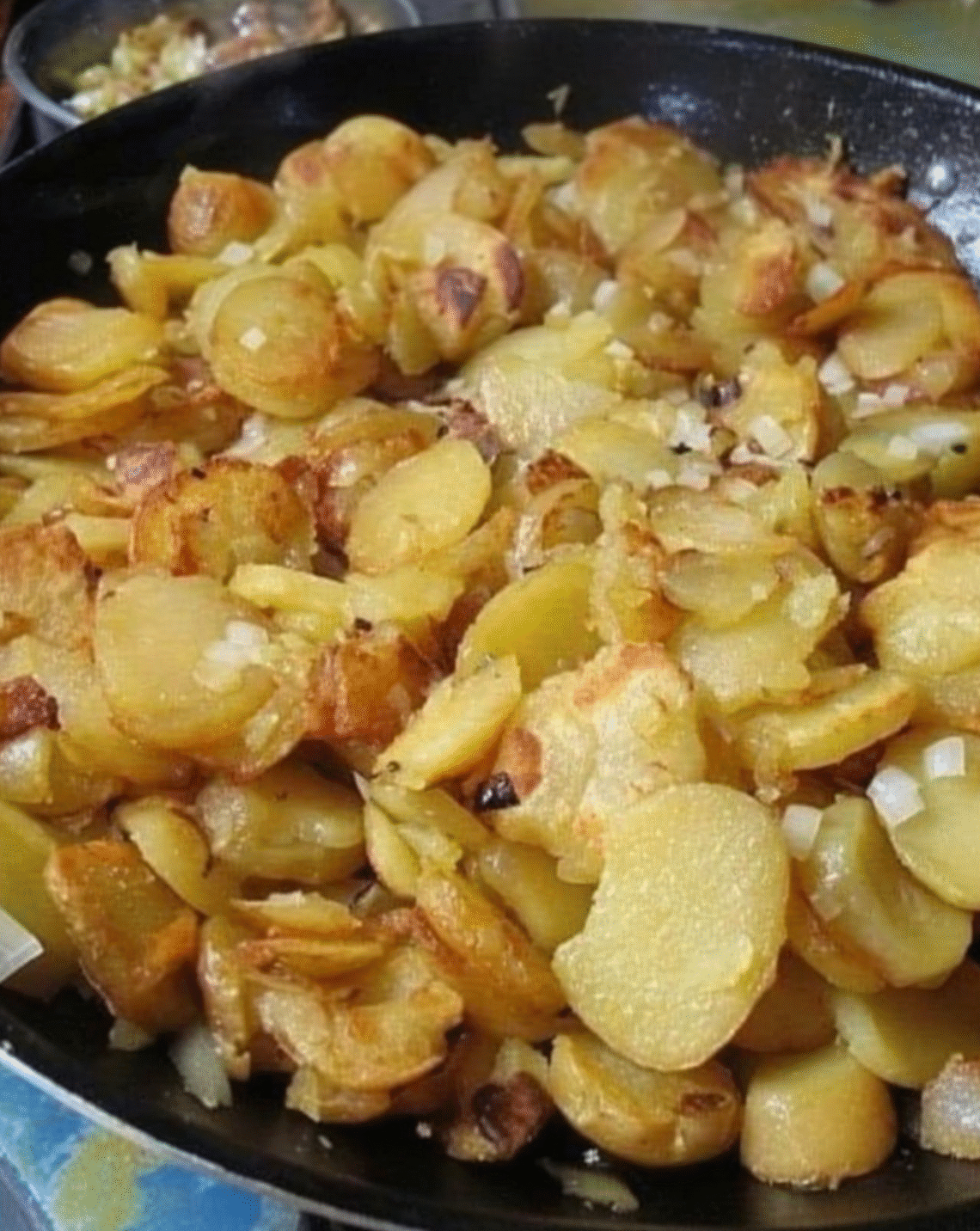
Imagine potatoes so tender they feel like clouds under your fork, their crisp golden edges crackling with a faint sizzle as you lift a bite. Scattered among them, thin ribbons of onion caramelize slowly, shimmering with sweet, nutty flavor that fills the kitchen with a memory almost before it’s tasted. This isn’t just dinner—it’s a connection to a past carved out of resilience, improvisation, and love.
For my Mama Elara, these fried potatoes and onions were survival, comfort, and ritual all at once. In her 1932 Ozark cabin, the bank had already claimed the land, leaving our family to scrape together meals with what we had on hand. Potatoes stored in the root cellar, onions hoarded against hunger, a small iron skillet over a smoky wood fire—these simple ingredients became magic in her hands. She fed twelve children with them, each bite a testament to resourcefulness and care.
For 92 years, this dish has been the centerpiece of harvest moons, snowbound Sundays, and chaotic evenings when the world outside seemed to unravel—but the pan in front of you held perfection, comfort, and sustenance.
Ingredients
For 4 generous servings (adjust as needed):
- 4 medium russet potatoes, peeled and cut into even, bite-sized cubes or thin slices
- 2 large onions, peeled and thinly sliced into half-moons
- 4 tablespoons lard, bacon fat, or vegetable oil (for authentic flavor, use rendered fat if possible)
- Salt, to taste
- Freshly ground black pepper, to taste
- Optional: a pinch of smoked paprika or fresh herbs (like thyme or parsley) for finishing
Notes on ingredients:
- Russet potatoes work best for crisping because of their starchy interior. Waxy potatoes like red or Yukon gold are delicious but will yield a softer, less crackling texture.
- Onions can be yellow, white, or sweet, depending on your preference. Caramelization will deepen flavor and add sweetness that balances the earthy potatoes.
- Using rendered fat or lard replicates the flavor of Mama Elara’s kitchen; vegetable oil works if you prefer a neutral base.
Step 1 — Preparing the Potatoes
- Peel and cut potatoes into uniform pieces to ensure even cooking. Large irregular chunks may cook unevenly—some crunchy, some mushy.
- Rinse the cut potatoes under cold water to remove excess starch. This step is key for achieving a crisp, golden crust.
- Pat them dry thoroughly with a clean kitchen towel or paper towels. Any surface moisture will cause oil to spit and prevent proper browning.
Step 2 — Slicing and Preparing the Onions
- Peel the onions and slice them thinly into half-moons or thin rings.
- Separate the layers gently so they can mingle freely with the potatoes.
- Optional: soak onions in cold water for 5–10 minutes before cooking to mellow their sharpness slightly.
Step 3 — Heating the Pan
- Heat a large cast-iron skillet or heavy-bottomed frying pan over medium heat. Cast iron is ideal because it retains heat evenly, producing that signature crackling crust.
- Add the fat of choice (lard, bacon fat, or oil) and allow it to shimmer. It should coat the bottom of the pan evenly.
Step 4 — Cooking the Potatoes
- Carefully add the potatoes to the hot fat in a single layer as much as possible. Crowding the pan will steam the potatoes rather than fry them.
- Let the potatoes cook undisturbed for several minutes to form a golden, crisp crust. Resist the urge to stir constantly—Mama Elara’s trick was patience, letting the heat create texture.
- Stir occasionally, gently turning the potatoes to brown all sides. This process usually takes 15–20 minutes depending on potato size and pan heat.
Step 5 — Adding the Onions
- When the potatoes are nearly done, add the sliced onions.
- Stir occasionally, allowing the onions to soften, caramelize, and mingle with the potatoes’ golden crust.
- Season generously with salt and freshly ground black pepper. Adjust to taste.
The onions release moisture as they cook, blending their natural sweetness with the earthy crunch of the potatoes. This is the moment where flavor develops—rich, comforting, and almost smoky if cooked in rendered fat.
Step 6 — Finishing and Serving
- Taste and adjust seasoning before serving. Optional: sprinkle a pinch of smoked paprika or a small amount of chopped fresh herbs for visual appeal and flavor lift.
- Serve hot, straight from the pan, preferably with a side of eggs, roasted meats, or just as a hearty standalone dish.
The final product should have crispy, golden edges with a soft, pillowy interior, dotted with caramelized onion ribbons that melt in your mouth. Every forkful is a contrast of textures, layers of sweet and savory, and a whisper of history and memory.
Tips from Mama Elara
- Don’t rush the browning process. Patience transforms simple potatoes into culinary gold.
- Rendered fat adds depth. Bacon or chicken fat will infuse the potatoes with subtle, smoky flavor that oil alone cannot match.
- Serve immediately. While delicious at room temperature, the contrast between crispy exterior and soft interior is most pronounced when fresh from the pan.
- Repurpose leftovers. Cold fried potatoes can be reheated in a skillet, retaining much of their original texture if done gently.
Reflections
Fried potatoes and onions are deceptively simple. They require minimal ingredients but reward skill, patience, and attention. They are more than a side dish—they are a story, a ritual, and a memory of resilience. When you bite into the crisp crust and sweet, tender onions, you’re not just tasting food; you’re tasting history, care, and a 1932 Ozark kitchen spirit that refuses to be forgotten.