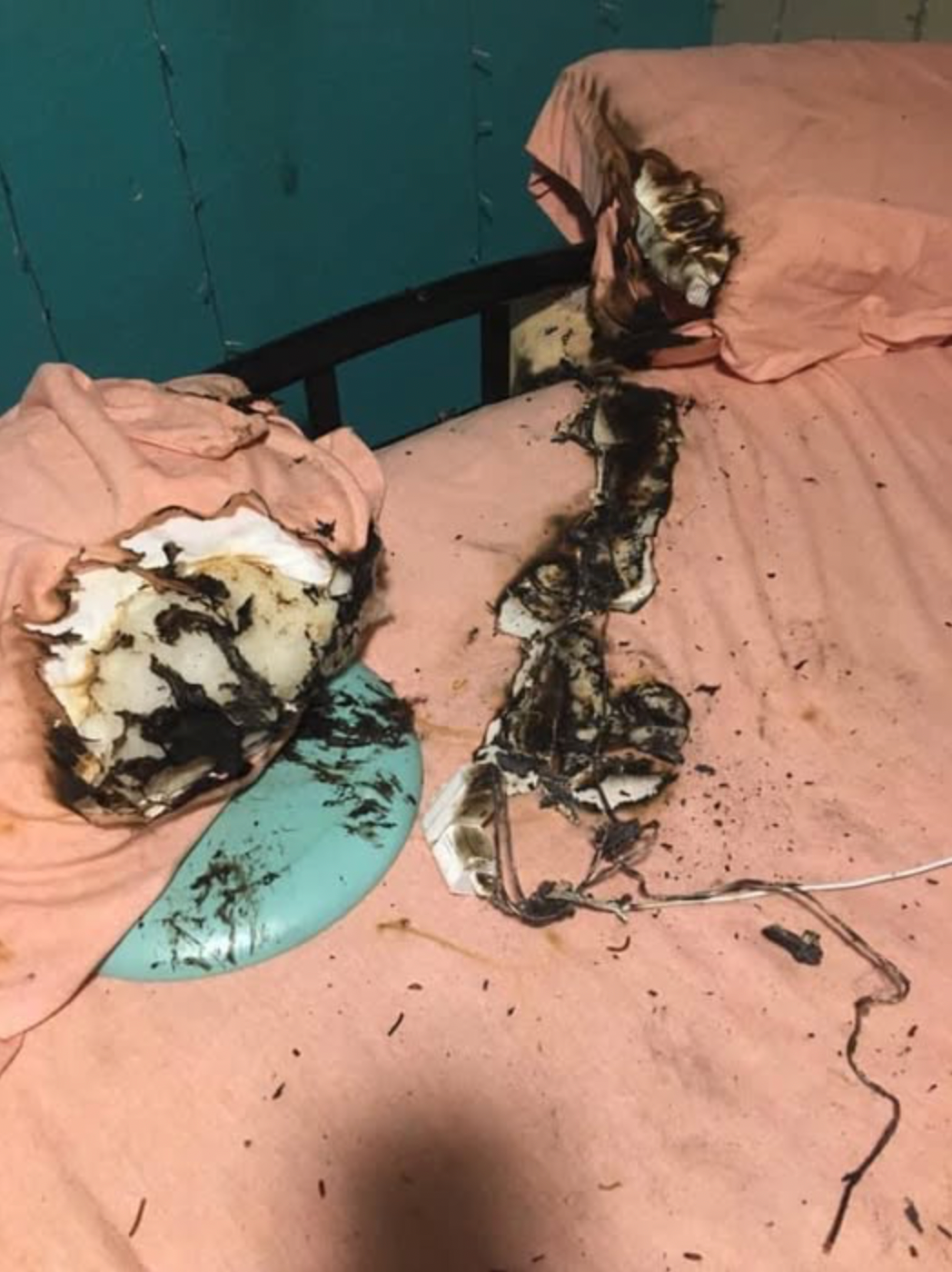
In recent years, firefighters and emergency responders around the world have increasingly warned the public about a seemingly harmless habit that has become part of daily life: sleeping with a mobile phone that is charging nearby or in bed. While smartphones are essential tools for communication, alarms, and entertainment, using them improperly—especially during sleep—can pose serious safety risks that many people underestimate or ignore.
These warnings are not based on theory or fear-mongering. They come from real emergency callouts, real house fires, real injuries, and real fatalities that firefighters have witnessed firsthand.
Why Firefighters Are Raising the Alarm
Firefighters consistently report that electrical fires caused by charging devices are becoming more common. The rise of smartphones, tablets, power banks, and fast-charging technology has increased the number of electrical loads running overnight, often unsupervised.
When people sleep, they are:
Less aware of smells, smoke, or heat
Slower to react if something goes wrong
Often trapped in enclosed spaces like bedrooms
This makes nighttime charging incidents especially dangerous.
How Phone Charging Can Become Dangerous
1. Overheating Is the Core Risk
Phones generate heat while charging. Under normal conditions, this heat dissipates safely. However, problems arise when:
The phone is placed on soft surfaces (beds, pillows, blankets)
Airflow around the device is blocked
The phone is covered by fabric
The battery is old or damaged
Soft materials act as insulators, trapping heat. If heat builds up faster than it can escape, the battery can fail.
2. Lithium-Ion Batteries Can Fail Catastrophically
Most smartphones use lithium-ion batteries, which store a large amount of energy in a small space. When damaged, overheated, or defective, these batteries can enter a state known as thermal runaway.
Thermal runaway can cause:
Rapid temperature increase
Battery swelling
Ignition or explosion
Release of flammable gases
Firefighters describe lithium battery fires as fast, intense, and difficult to extinguish.
3. Cheap or Damaged Chargers Increase the Risk
Firefighters often identify the following as contributing factors:
Non-certified or counterfeit chargers
Frayed or bent charging cables
Loose charging ports
Chargers overheating at the wall outlet
Low-quality chargers may lack proper voltage regulation, increasing the risk of overheating and short circuits.
The Specific Dangers of Sleeping With a Charging Phone
Charging a Phone in Bed
This is one of the most dangerous habits firefighters warn against.
When a phone is:
Under a pillow
Beside your face
Under blankets
Between mattress and bedframe
Heat cannot escape. In the event of ignition, fire spreads rapidly through bedding materials, which are highly flammable.
Burns and Injuries
Firefighters have responded to cases where people suffered:
Facial burns
Hand burns
Thigh or leg burns
Smoke inhalation
These injuries often happen before the person wakes up, especially if the phone ignites silently at first.
Smoke Inhalation While Sleeping
Smoke is often more dangerous than flames. In a bedroom fire:
Smoke accumulates quickly
Toxic gases can render a person unconscious within minutes
A sleeping person may not wake up in time to escape
This is why firefighters stress that any fire risk during sleep is extremely serious.
Power Banks and Overnight Charging
Power banks pose additional risks:
They often lack advanced thermal controls
Many are cheaply manufactured
They are frequently charged on beds or sofas
Firefighters strongly advise never charging power banks overnight, especially near sleeping areas.
Common Myths Firefighters Want to Correct
“My phone is modern, so it’s safe”
Even modern phones can fail if:
The battery is degraded
The charger is faulty
The environment traps heat
Safety systems reduce risk but do not eliminate it.
“It only happens to cheap phones”
Firefighters report incidents involving both expensive and budget devices. The issue is not brand—it is heat, electricity, and environment.
“I’ve done it for years with no problem”
Past luck does not prevent future failure. Many fires occur after months or years of normal use.
Firefighters’ Safety Recommendations
Fire departments around the world consistently recommend the following:
Safe Charging Practices
Charge phones on hard, flat surfaces
Keep devices away from flammable materials
Do not cover charging devices
Use original or certified chargers
Replace damaged cables immediately
Bedroom Safety
Never charge phones under pillows or blankets
Avoid charging devices on beds or sofas
Keep charging devices away from your head
Install working smoke alarms near bedrooms
Overnight Charging Alternatives
Charge phones earlier in the evening
Place phones on a bedside table, not the bed
Unplug once fully charged
Avoid charging while sleeping if possible
Why Firefighters Speak So Strongly About This Issue
Firefighters see consequences most people never do:
Homes destroyed in minutes
People injured by preventable fires
Families displaced due to a simple habit
From their perspective, sleeping with a charging phone is an unnecessary risk with no real benefit.
Final Thoughts
Charging a phone while sleeping may feel harmless, convenient, and routine—but firefighters warn that it carries real and avoidable dangers. Heat buildup, faulty chargers, lithium battery failure, and flammable bedding can combine into a life-threatening situation when people are least able to respond.