CARAMEL CHOCOLATE CRUNCH BARS
A Complete Master Recipe With Culinary Science, Technique Control, and Professional Guidance
1. WHAT THESE BARS REALLY ARE (STRUCTURAL OVERVIEW)
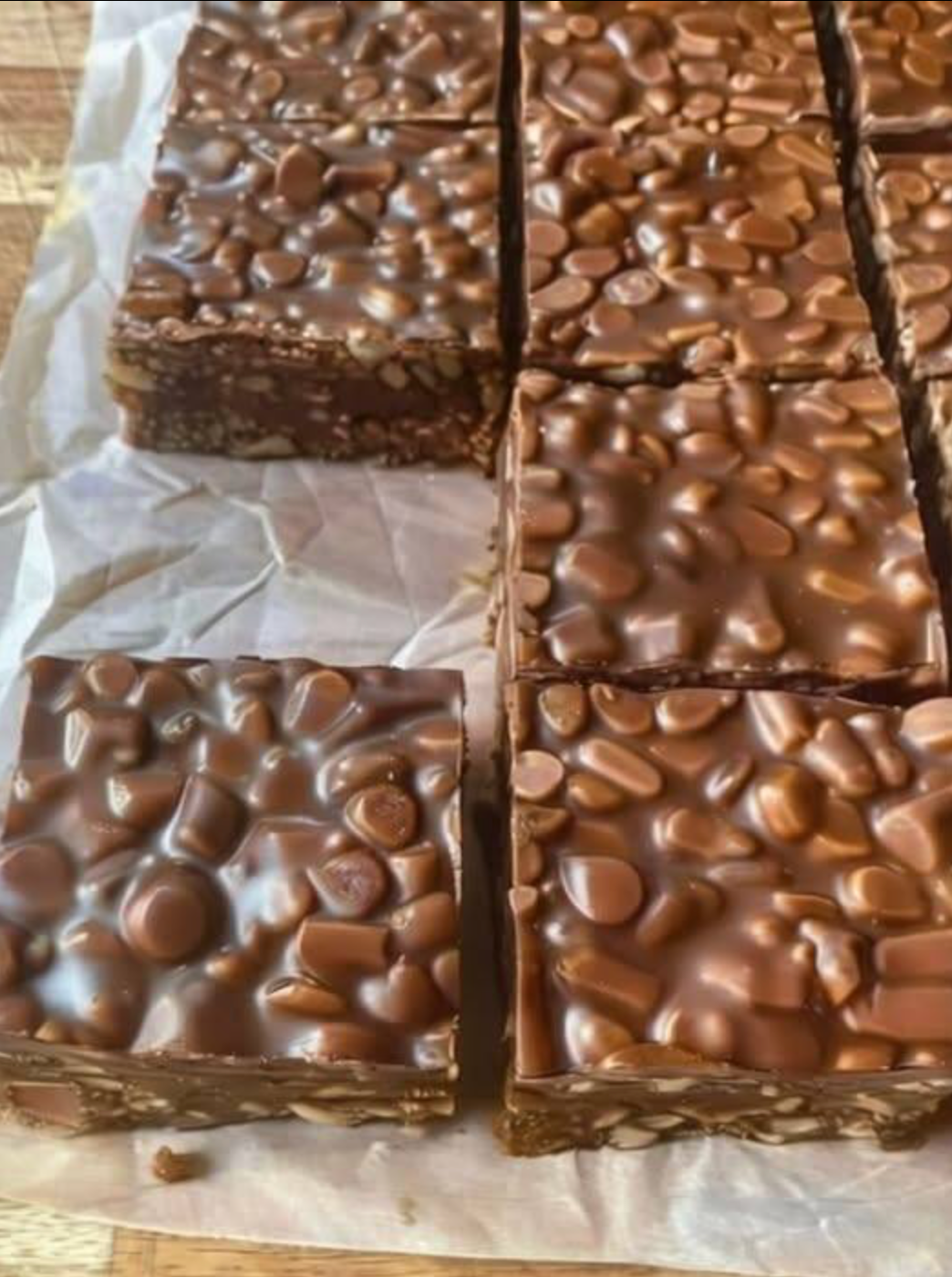
Caramel Chocolate Crunch Bars are not just a sweet treat. Structurally, they are a three-layer composite dessert, where each layer performs a specific mechanical and sensory role:
- Base Layer (Crunch Foundation)
- Provides rigidity
- Absorbs pressure during cutting
- Acts as a moisture barrier
- Middle Layer (Caramel Suspension Matrix)
- Supplies chew, elasticity, and sweetness
- Binds crunch inclusions
- Balances fat and sugar for mouthfeel
- Top Layer (Chocolate Seal)
- Protects caramel from drying
- Adds snap and bitterness
- Locks aroma inside the bar
The success of this dessert depends on layer balance, temperature control, and fat–sugar ratios.
2. INGREDIENTS — DEEP EXPLANATION (WHY EACH ONE MATTERS)
A. BASE LAYER INGREDIENTS
Digestive Biscuits / Graham Crackers (200 g)
These biscuits are ideal because:
- They contain pre-baked starches, meaning no raw flour taste
- Their mild sweetness doesn’t compete with caramel
- They absorb melted butter evenly
Substitutions (with consequences):
- Shortbread: richer but softer base
- Oreo (without cream): darker, more bitter
- Corn biscuits: extra crunch but fragile
Unsalted Butter (120 g, melted)
Butter performs three critical functions:
- Binds crumbs together
- Adds fat for mouthfeel
- Prevents dryness during refrigeration
Why unsalted:
Salt content varies between brands. You control salt later.
Butter temperature rule:
Melted but not hot. Hot butter destroys crumb structure.
Sugar (Optional, 2 tablespoons)
Only needed if:
- Using very plain biscuits
- Selling commercially (customers expect sweetness)
Skip if biscuits are already sweet.
B. CARAMEL LAYER INGREDIENTS
This is the most important layer.
Unsalted Butter (120 g)
Butter here:
- Prevents crystallization
- Creates elasticity
- Softens caramel texture
Too little butter → hard caramel
Too much butter → greasy separation
Brown Sugar (100 g)
Brown sugar contains molasses, which:
- Adds depth
- Slows crystallization
- Gives darker caramel flavor
Light brown: milder, cleaner
Dark brown: stronger, almost toffee-like
Sweetened Condensed Milk (397 g)
This ingredient is the backbone of this caramel.
Why it works:
- Already emulsified
- Contains milk proteins that prevent burning
- Provides lactose, which browns differently than sucrose
Never substitute with evaporated milk.
That will fail completely.
Vanilla Extract (1 teaspoon)
Added AFTER cooking to preserve aroma.
Vanillin enhances perception of sweetness without adding sugar.
Salt (1/4 teaspoon)
Salt:
- Suppresses bitterness
- Sharpens caramel flavor
- Prevents flat sweetness
Do not skip.
C. CHOCOLATE TOPPING INGREDIENTS
Chocolate (200 g)
Milk chocolate: classic, sweet
Dark chocolate (60–70%): balance, sophistication
Avoid compound chocolate unless selling at scale.
Oil or Butter (1 tablespoon)
This:
- Improves flow
- Prevents cracking
- Creates glossy finish
Neutral oil keeps flavor clean.
D. CRUNCH ADD-INS (TEXTURE ENGINEERING)
Crunch elements change how the bar feels when bitten.
| Add-In | Effect |
|---|---|
| Puffed rice | Light, airy crunch |
| Cornflakes | Loud crunch, nostalgic |
| Nuts | Dense crunch, savory |
| Pretzels | Salty snap |
Crunch ratio rule:
- Max 30–35% of caramel volume
- More than that weakens binding
3. PREPARATION — PROFESSIONAL METHOD
STEP 1: PAN ENGINEERING
Line pan with parchment both directions if possible.
Press parchment tightly into corners to prevent caramel leakage.
Ideal pan:
- Metal for clean edges
- Avoid glass (retains heat unevenly)
STEP 2: BASE CONSTRUCTION (CRITICAL PRESSURE CONTROL)
- Crush biscuits finely but not dusty
- Combine with butter evenly
- Press firmly — harder than you think
- Chill minimum 15 minutes
Why chilling matters:
- Butter solidifies
- Base resists caramel heat
STEP 3: CARAMEL COOKING — THE SCIENCE
Cook on medium-low heat only.
Caramel thickening happens through:
- Water evaporation
- Protein interaction
- Fat emulsification
Stir constantly, scraping bottom and corners.
Visual signs of readiness:
- Color: golden tan
- Texture: slow ribbon off spoon
- Sound: quieter bubbling
Time range: 8–12 minutes, never rush.
STEP 4: ADDING CRUNCH (TIMING IS EVERYTHING)
Add crunch immediately after removing from heat.
Why:
- Hot caramel coats evenly
- Cooling caramel traps air pockets if delayed
Mix thoroughly but gently.
STEP 5: LAYERING THE CARAMEL
Pour over cold base.
Spread quickly but carefully.
Let sit 10 minutes before refrigerating to avoid condensation.
Chill until:
- Firm but slightly pliable
- Not rock solid
STEP 6: CHOCOLATE MELTING (TEMPERATURE DISCIPLINE)
Ideal chocolate temperature:
- 45–50°C when melted
- Pour at ~38–40°C
Too hot → melts caramel
Too cold → thick uneven layer
STEP 7: FINAL SET
Chill until fully firm.
Do not freeze unless storing long-term.
4. CUTTING — CLEAN BAR TECHNIQUE
Use:
- Long sharp knife
- Hot water dip
- Clean between cuts
Cutting order:
- In half
- Quarters
- Final bars
Never saw back and forth.
5. STORAGE SCIENCE
Refrigerator
- 5–7 days optimal
- Airtight container
- Parchment between layers
Freezer
- Up to 2 months
- Wrap tightly
- Thaw slowly in fridge
Room Temperature (Short Term)
- Only if chocolate is tempered
- Max 24 hours
6. SCALING FOR SELLING
Batch Scaling
Multiply all ingredients by:
- x2 for 9×13 pan
- x5 for tray bakes
Do NOT reduce caramel cooking time.
Cost Control Tips
- Use bulk biscuits
- Dark chocolate allows thinner layer
- Cornflakes cheaper than puffed rice
Shelf Life for Sale
- Refrigerated display only
- Label: “Contains dairy”
7. COMMON FAILURES AND SOLUTIONS
Caramel too hard
- Overcooked
- Reduce time by 1–2 minutes
Caramel separating
- Heat too high
- Stir constantly next time
Base crumbling
- Not pressed enough
- Increase butter by 10 g
Chocolate cracking
- Too cold when cutting
- Add oil next time
8. FLAVOR VARIATIONS (ADVANCED)
Salted Espresso Version
- Add instant coffee to caramel
- Dark chocolate topping
Coconut Crunch
- Add toasted coconut flakes
- Milk chocolate topping
Peanut Butter Caramel
- Swirl peanut butter into caramel
- Reduce sugar slightly
9. WHY THIS RECIPE WORKS
Because it:
- Balances fat, sugar, and crunch
- Uses condensed milk for stability
- Separates texture roles per layer
- Controls temperature at every step
This is not a casual recipe.
It is structurally sound dessert engineering.