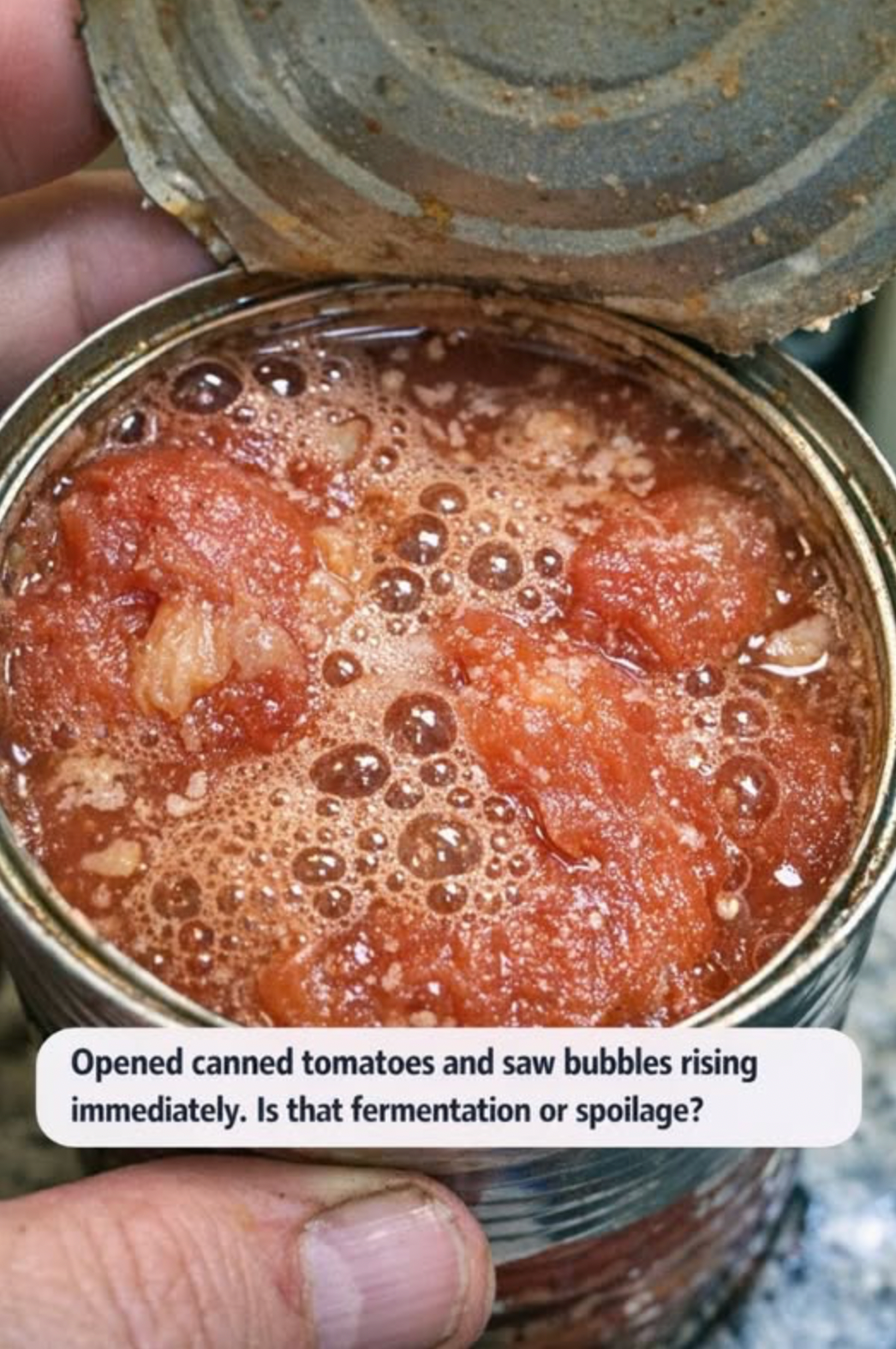
There’s nothing more unsettling than opening a can of tomatoes and noticing tiny bubbles rising to the surface. Your first thought might be: Is this normal, or is it spoiled?
The answer isn’t always obvious. Bubbles in canned tomatoes can mean two very different things: natural fermentation or dangerous spoilage. Understanding the difference is crucial for your health and safety, and knowing what to look for can prevent foodborne illness—or prevent wasting perfectly good tomatoes.
Why Are There Bubbles in Canned Tomatoes?
Cans are meant to preserve food by creating a vacuum seal that keeps bacteria out. But sometimes, bubbles appear due to:
1) Fermentation
Some bacteria or yeasts survive the canning process and start to ferment the sugars in the tomatoes.
Fermentation produces gas (usually carbon dioxide), which forms visible bubbles.
Fermented canned tomatoes may smell slightly sour but not putrid.
2) Spoilage
Other bacteria that survive can cause dangerous spoilage, producing bubbles as a sign of microbial activity.
Spoiled canned tomatoes often have a foul odor, slimy texture, bulging lid, or discoloration.
This is not safe to eat, even if you cook them.
How to Tell the Difference: Fermentation vs. Spoilage
Here’s a practical checklist to identify whether your canned tomatoes are still safe:
1) Check the Lid and Can
Bulging or swollen lid: Dangerous. Indicates gas from harmful bacteria like Clostridium botulinum. Do not taste. Throw away.
Leaking can: Unsafe. Possible contamination.
Rust or severe dents: May compromise seal—toss.
2) Observe the Tomatoes
Normal bubbles: Small, occasional, and clear or slightly cloudy. Can happen even in safely canned tomatoes.
Spoiled appearance:
Darkened or grayish color
Slimy texture
Mold (white, green, or black spots)
Excessively foamy liquid
3) Smell Test
Safe: Fresh tomatoes smell sweet or slightly acidic.
Unsafe: Off-putting, sour, rotten, or putrid smell = discard immediately.
4) Taste Test
Only if everything else looks fine.
Taste a tiny amount.
Sour tang from fermentation may be okay, but bitterness, metallic taste, or off-flavors are signs of spoilage.
When in doubt, throw it out. Never risk foodborne illness.
Common Causes of Bubbles in Canned Tomatoes
Natural sugar fermentation
Some sugars in tomatoes ferment over time, especially in homemade or less acidic varieties.
Air trapped during canning
Tiny air bubbles can remain in the liquid, especially in older cans.
Temperature fluctuations
Storing cans in warm or fluctuating temperatures may speed up fermentation or spoilage.
Extended storage
Cans can last 1–5 years depending on brand, but the longer they sit, the higher the chance of natural bubbles or spoilage.
Is It Safe to Eat Bubbly Canned Tomatoes?
Safe if:
Can is intact
Lid is flat
Tomatoes look normal
Smell is fresh
Bubbles are tiny or minimal
Unsafe if:
Lid is bulging
Liquid is foamy or slimy
Mold present
Off-putting smell
Taste is strange or bitter
Never taste tomatoes from a bulging or leaking can. Botulism can occur without changing taste or smell and is extremely dangerous.
Tips to Prevent Bubbles and Spoilage
1) Store Properly
Keep canned tomatoes in a cool, dry place.
Avoid temperature fluctuations.
Check cans before use.
2) Use Older Cans First
Practice first-in, first-out (FIFO): use older cans before new ones.
3) Check Before Use
Inspect lid, can, and liquid for unusual bubbles, color changes, or mold.
4) Proper Canning Techniques (Homemade)
Sterilize jars thoroughly.
Use a pressure canner for low-acid foods.
Avoid overfilling jars.
Remove air bubbles before sealing.
Quick Reference: Bubble Checklist
Sign
Meaning
Action
Tiny bubbles, clear liquid, normal color
Possibly natural fermentation
Safe, optional use
Lid bulging
Dangerous bacterial activity
Discard immediately
Foam, slimy texture
Spoilage
Discard
Off smell
Spoilage
Discard
Mold
Spoilage
Discard
Bottom Line
Bubbles in canned tomatoes are not always a cause for alarm, but they should never be ignored. Most of the time, tiny bubbles are harmless or the result of minimal fermentation, but any signs of spoilage—especially bulging lids, foul odor, slime, or mold—mean the tomatoes are unsafe.
When in doubt, it’s better to discard the can. Food safety is more important than wasting a few tomatoes.