Sweet-Lemon Garlic Butter Baked Crab
A One-Pan Ocean Dream for Slow Evenings and Soft Light
There is a kind of dinner that doesn’t demand attention—it invites presence.
Not rushed. Not complicated. Not engineered with tricks or unnecessary steps.
Just real food, handled with care, kissed by heat, and carried by butter, citrus, and patience.
Crab prepared this way doesn’t fight you.
It yields. It relaxes.
It becomes tender, pearlescent, and almost fragile with sweetness.
And all of this happens with one pan, six ingredients, and no chaos.
No noisy boil roiling on the stove.
No shells splashing into salted water.
No steam fogging the room like a ship leaving harbor.
Just quiet preparation, a slow oven, and the scent of roasted garlic rising like memory.
INGREDIENTS — expanded with purpose and feeling
Crab
1.5–2 pounds crab legs, clusters, or split whole crab
Fresh is elegant. Frozen is perfectly welcome as long as it’s thawed gently.
Crab carries its own sweetness, its own whisper of ocean—your task is not to overpower, but to frame it, like matting around a painting.
Butter
6 tablespoons salted butter, soft gold in solid form
Butter is the foundation—the silk that carries flavor and moisture, that shines on shell and flesh, that browns at the edges like caramel and sun.
Garlic
4–6 cloves, finely minced
Garlic is warmth. Garlic is comfort. Garlic is the familiar hand that guides seafood gently into fullness.
Lemon
1 whole lemon — zest + juice
Zest is perfume, juice is electricity. Zest floats while juice cuts. Together they brighten the richness like sunlight on water.
Salt & Black Pepper
The simplest seasonings, ancient and eternal.
Salt wakes flavor from sleep. Pepper adds a soft hum at the edges.
Optional additions, for those who like to embellish
A pinch of cayenne for quiet heat behind the butter.
Parsley for brightness at the end.
Paprika for depth and a faint smoky blush.
This dish works without ornament—but like jewelry, garnish can change the mood.
METHOD — slow, expanded, sensory cooking
1. Preparing the crab
Remove the crab from its packaging gently—the shells are armor, yes, but the meat inside is delicate as silk filament. If frozen, let it thaw not in haste, but under refrigeration for hours. A slow thaw preserves the moisture inside, allowing the crab to bake tender instead of tightening.
Pat dry—this step is not cosmetic.
Where moisture remains, flavor diffuses.
Where shells are dry, butter clings.
Crack shells lightly if whole—not to destroy structure, but to create doorways for flavor to wander through. We are not forcing butter—we are inviting it inward.
Lay the pieces on a baking pan or dish, not crowded, not stacked.
Crab needs space to breathe, for heat to circulate like tide around stone.
2. Making the garlic–lemon butter
Place a small pan on the stove over low heat—gentle flame, patient melting.
Drop in the butter; watch it soften, slump, and pool into gold.
Add garlic when butter has lost its shape but not its clarity.
Stir. Slowly. Thoughtfully.
Garlic must bloom, not brown. Brown garlic turns bitter; bloomed garlic turns sweet, round, alive.
Zest the lemon directly over the pan—the oils release instantly, rising like citrus fog.
Add half the lemon juice. Save the rest.
Add salt, add pepper. Stir again.
Taste. Yes—taste.
The butter should feel like velvet on your tongue, like warmth melting through brightness.
If it tastes flat, add lemon.
If it tastes sharp, add butter.
Balance is not measured—it is felt.
3. Pouring, coating, blessing
Slowly—never rushed—spoon or pour the melted butter over the crab.
Let it run like riverwater through crevices.
Tilt shells so butter seeps beneath, pooling in the natural curves where leg meets joint.
Rub gently with fingers or brush like painting—this is seasoning, but also ceremony.
What you’re doing is not just coating.
You are saturating.
You are marinating in real time.
4. Oven baking — the quiet transformation
Slide the tray into a preheated 190°C / 375°F oven.
You will not need to touch it for a while. Let the heat do the slow work.
After 10–12 minutes, open the oven and spoon butter back over the shells.
This is not necessity—it is devotion.
It keeps the meat rich, tender, shining.
Continue baking another 5–10 minutes.
You are not waiting for doneness—the crab was already cooked.
You are waiting for tenderness, for fragrance, for union of fat and shell and sea.
You will know it’s ready not by time, but by smell.
Garlic, sweetened.
Butter, nutty at the edges.
Lemon, lifted in steam like bright salt air.
SERVE — slow, generous, glowing
Pull the pan from the oven.
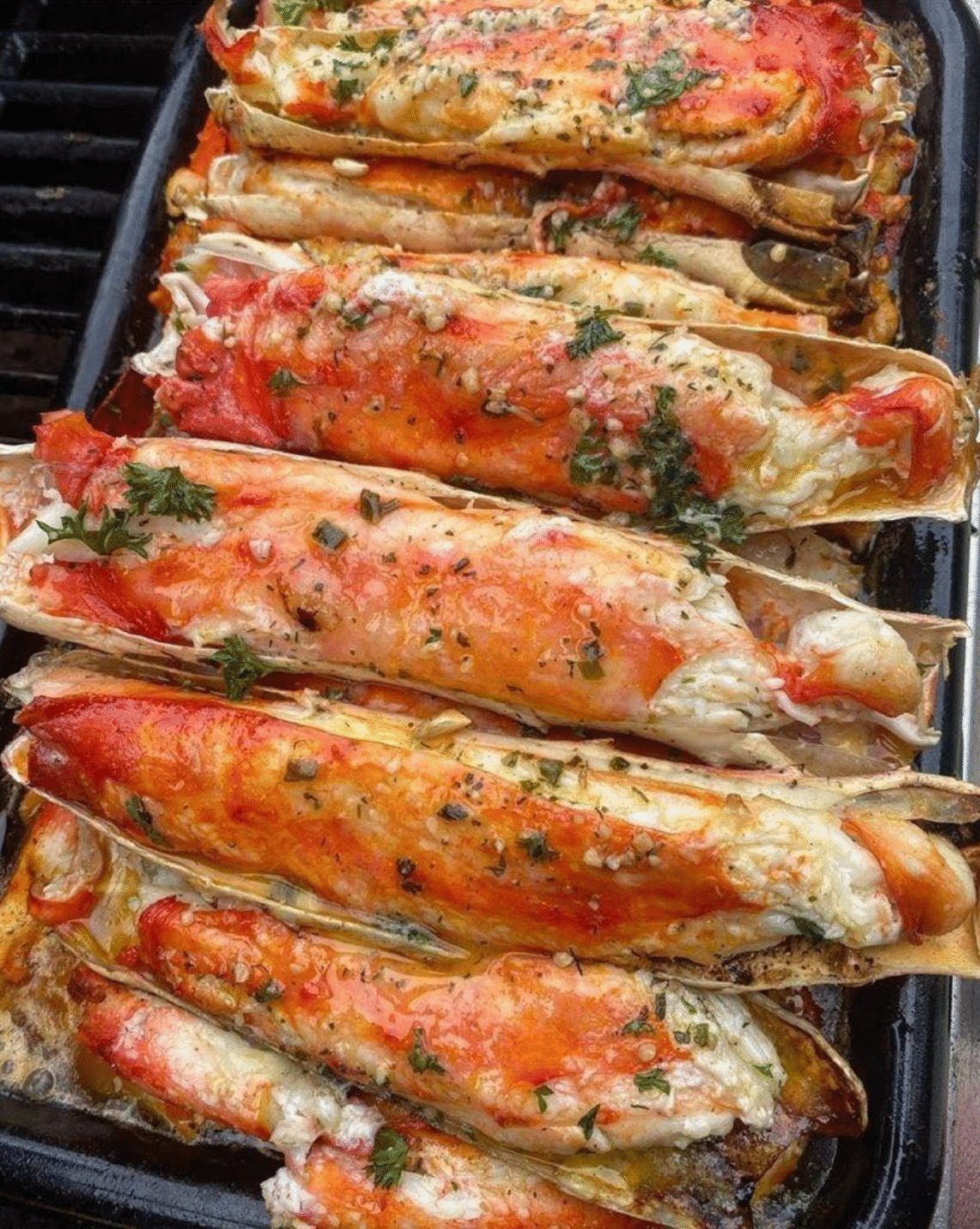
The butter should be bubbling like small tides against the metal.
Shells gleam like lacquered coral.
Steam rises like breath.
Spoon butter over the crab once more.
Not excess—completion.
Squeeze the remaining lemon.
Scatter parsley if you wish—green against gold is beautiful.
Serve immediately with warm bread, soft rolls, or simply your hands.
Crab is eaten slowly, piece by piece, bite by reverent bite.
Tender, sweet, fragrant—exactly what seafood should be.
NOTES ON PLEASURE & LEFTOVERS
This dish is best fresh, hot, dripping with garlic butter that still moves like liquid sunlight.
Leftovers can be cooled and stored, then flaked over pasta, folded into risotto, tucked into bread, or eaten cold from the refrigerator like stolen treasure.
But believe me—most of the time, there will be none left at all.