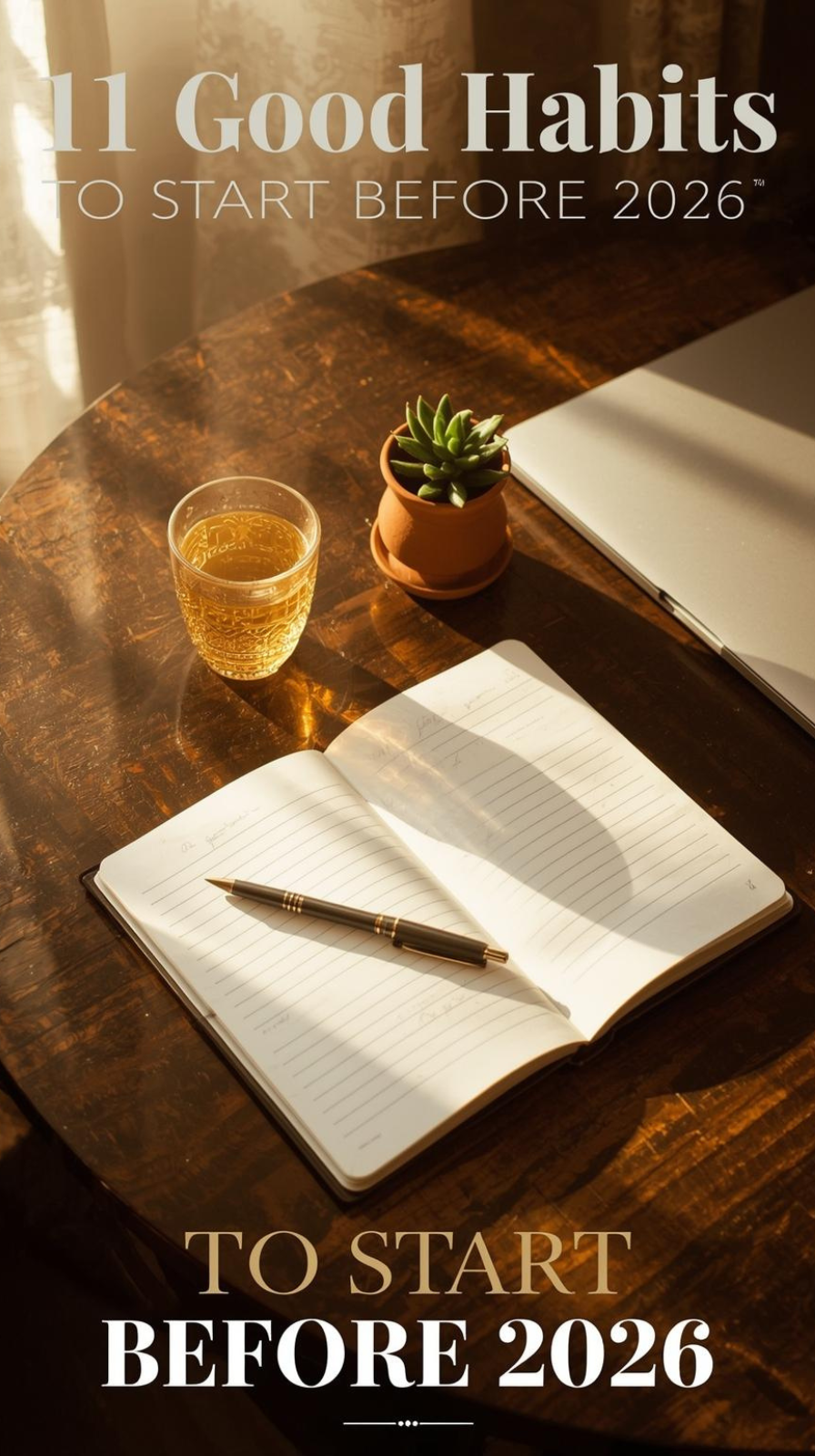
The 120-Day Runway: 11 Good Habits to Build Before 2026
Here we are. It’s Sunday, August 31st, a little past three in the afternoon. The sun, beginning its slow descent, casts long, golden shadows across Casablanca. There’s a tangible shift in the air; the intense, humid heat of high summer is starting to yield to a softer warmth, a subtle promise of the autumn to come. This moment, poised at the end of a month and the cusp of a new season, brings with it the quiet realization that 2025 is starting its final chapter.
With exactly four months left until we welcome 2026, it’s easy to feel a familiar pang of anxiety. The pressure of time slipping away, of goals unmet, can begin to mount.
But let’s reframe this moment. This is not a frantic countdown to a finish line. This is the beginning of a runway. The next 120 days are a powerful, precious opportunity to build the foundation for the person we want to be next year. Instead of crashing into January with a list of overwhelming resolutions, what if we could glide into 2026 with a set of powerful, positive habits already woven into the fabric of our lives?
Imagine entering the new year not with a sense of deficit, but with a feeling of momentum. Here is an in-depth guide to 11 good habits you can begin today to finish this year strong and step into the next with purpose and grace.
Habits for a Clearer, Calmer Mind
1. Practice a 5-Minute “Brain Dump” Journal Why it matters: Our minds are like browsers with too many tabs open. Unfinished tasks, lingering worries, and stray ideas constantly pull at our attention, a psychological phenomenon known as the Zeigarnik effect. A daily “brain dump” is a powerful tool to close these mental tabs. It externalizes your thoughts, reducing the cognitive load and allowing your mind to rest. This simple practice can significantly decrease anxiety and improve your ability to focus on the present. How to start: Each evening before you wind down, set a timer for five minutes. Take a notebook and a pen, and write. Let go of any need for structure, grammar, or coherence. Capture everything: the task you forgot to do, the conversation you’re replaying, the brilliant idea that struck you, the grocery list. The goal is not to solve anything, but simply to release it. Level Up: After your five minutes, take 30 seconds to circle the one or two items that are most important for tomorrow. This adds a layer of gentle organization without pressure.
2. Implement a “Digital Sunset” Why it matters: The blue light emitted from our screens is a known suppressor of melatonin, the hormone that signals to our body that it’s time to sleep. Beyond the physiological effects, the constant stream of information, notifications, and social pressures keeps our nervous system in a low-grade state of alert. A “digital sunset” creates a crucial buffer zone, allowing your brain to transition from a state of high engagement to one of rest and relaxation, leading to deeper, more restorative sleep. How to start: Designate the last 60-90 minutes before your intended bedtime as a screen-free period. This is a non-negotiable appointment with yourself. Charge your phone in another room to remove temptation. Use this sacred time for analog activities: read a physical book, listen to calming music or a podcast, do some gentle stretching, take a warm bath, or have a real conversation with a loved one.
3. Read for 15 Minutes a Day Why it matters: In an age of soundbites and headlines, deep reading is a form of meditation. It improves concentration, expands vocabulary, and reduces stress by immersing you in another world or perspective. Committing to just 15 minutes a day is an achievable promise that compounds over time. By the end of 2025, this small habit could lead you through five, ten, or even more books, enriching your inner world immeasurably. How to start: Choose a book you are genuinely excited about, not one you feel you should read. Link the habit to an existing routine—perhaps it becomes what you do while drinking your morning coffee, during your lunch break, or right after you implement your digital sunset.
Habits for a Stronger, More Resilient Body
4. Go for a Daily 30-Minute Walk Why it matters: Walking is arguably the most underrated form of exercise. It’s a low-impact activity that improves cardiovascular health, strengthens bones, regulates mood through the release of endorphins, and aids in creative problem-solving. It connects you to your environment and provides a gentle rhythm in a chaotic world. How to start: Schedule it. As the Moroccan autumn ushers in cooler, more pleasant evenings, a walk along the Corniche or through the quieter streets of your neighborhood becomes a pleasure, not a chore. Use the time to listen to your favorite podcast, call a family member, or simply be present with the sounds and sights around you.
5. Master a Consistent Sleep Schedule Why it matters: Sleep is not a luxury; it is the foundation of all physical and mental health. A consistent sleep schedule—going to bed and waking up within the same 30-minute window every day—is the single most effective way to improve your sleep quality. It stabilizes your circadian rhythm, which in turn regulates everything from your hormones and appetite to your immune response and cognitive function. How to start: Don’t make a drastic change. For the next week, aim to get into bed just 15 minutes earlier than your current average. The following week, another 15. The goal is to gradually shift your schedule until you find a consistent bedtime that allows for 7-9 hours of quality sleep. This gradual approach is far more sustainable than a sudden shock to your system.
6. Add One More Serving of Vegetables a Day Why it matters: The most successful nutritional changes are based on addition, not restriction. Focusing on what you can add to your diet creates a positive mindset and naturally crowds out less healthy options. Committing to one extra serving of vegetables is a simple way to increase your intake of fiber, vitamins, and antioxidants, which supports gut health, reduces inflammation, and boosts energy. How to start: Identify the easiest meal to upgrade. Can you toss a large handful of spinach into your morning tagine or omelet? Add a side salad loaded with fresh greens to your lunch? Snack on cucumber and carrot sticks with hummus in the afternoon? Make it simple, visible, and delicious.
Habits for a More Organized, Purposeful Life
7. Conduct a Weekly 10-Minute Financial Review Why it matters: Financial anxiety often stems from a lack of clarity. Ignoring your finances doesn’t make the stress go away; it amplifies it. A brief, consistent check-in demystifies your financial situation and empowers you to make conscious decisions. You’ll enter 2026 with a powerful sense of control over your resources. How to start: Block out 10 minutes in your calendar every Sunday afternoon. During this time, open your banking app. Review the week’s transactions. Ask yourself two simple questions: 1. “Is my spending aligned with my values and goals?” 2. “Are there any surprises here?” That’s it. No complex spreadsheets required.
8. Follow the “One-In, One-Out” Rule Why it matters: Clutter is a physical manifestation of procrastination and indecision. This simple rule is a powerful, pressure-free strategy to maintain equilibrium in your home, especially before the gift-giving season begins. It transforms you from a passive consumer into a conscious curator of your space. How to start: Create a designated donation bag and keep it in an accessible spot. The next time you bring a new item of clothing, a book, or a kitchen gadget into your home, choose a similar item you no longer use or love and place it in the bag.
9. Plan Your Week Every Sunday Why it matters: A week without a plan is a week lived in reaction. Taking just 15 minutes to set a course reduces decision fatigue, alleviates Monday morning anxiety, and ensures that your time is allocated to your priorities, not just urgent but unimportant tasks. How to start: Sit down with your preferred calendar (digital or physical). First, identify your “Big 3″—the three most important things you want to accomplish this week. Schedule them first. Then, block out time for your non-negotiables: workouts, social plans, and deep work. Finally, glance at the week ahead to anticipate any challenges.
10. Practice a Skill for 10 Minutes a Day Why it matters: The path to mastery is paved with small, consistent efforts. The idea of learning a new skill can be daunting, but breaking it down into a 10-minute daily practice makes it incredibly approachable. The power of compounding means that these tiny sessions will add up to significant progress by the end of the year. How to start: Choose one skill you’re curious about—learning Darija, playing the oud, coding, painting. Set a timer for 10 minutes and just begin. The goal is not to be perfect; the goal is simply to show up. Lower the barrier to entry so much that it’s harder to say no than to just do it.
11. Make One Meaningful Connection Daily Why it matters: In our increasingly digital world, it’s possible to feel connected to hundreds of people yet deeply lonely. True well-being is intrinsically linked to the quality of our relationships. This habit is about being intentional in nurturing those connections beyond a passive “like” or a quick emoji. How to start: Each day, pick one person. Send a thoughtful text asking a specific question about their life. Make a quick phone call during your walk home instead of scrolling. Give your partner or family member five minutes of your undivided, screen-free attention. It’s the quality, not the quantity, of the connection that matters.
Conclusion
From this vantage point, on the cusp of September in Casablanca, 2026 doesn’t feel like a distant deadline. It feels like an invitation. The next four months are not just the end of a year; they are the runway to the next. By choosing to cultivate even a few of these good habits now, you are giving a profound gift to your future self. You are choosing to enter the new year not with a list of resolutions born from pressure, but with a lifestyle built on a foundation of intention and self-respect.
Start small. Be consistent. Be compassionate with yourself. And watch how these simple practices transform your world.