If you’ve ever cooked a meal, especially frying or sautéing, you probably noticed a thin film of grease slowly accumulating on your cabinets. That sticky residue can attract dust, darken surfaces, and even make your kitchen feel grimy over time.
Many people reach for chemical cleaners, but these can be harsh, toxic, or irritating, especially around food areas. Thankfully, you don’t need harsh chemicals to get your cabinets sparkling again. With just two natural ingredients—baking soda and white vinegar—you can safely and effectively remove grease, restore your cabinets’ shine, and freshen the air.
This guide will cover why this works, how to do it properly, tips for delicate surfaces, and even preventative methods so your kitchen stays cleaner for longer.
Why Grease Builds Up on Cabinets
Cooking releases oils, smoke, and food particles into the air. Even with a range hood, some of this airborne grease settles on cabinets, walls, and shelves, creating a sticky, stubborn layer. Over time, this layer can:
- Darken the finish of cabinets
- Attract dust and dirt
- Cause surfaces to feel sticky
- Make cleaning with water alone almost impossible
Grease is essentially oil combined with dust and food particles, which is why it can’t simply be wiped away with water. It needs something that breaks down oil.
The 2 Ingredients You’ll Need
- White Vinegar
- A natural degreaser and disinfectant
- Acidic properties help dissolve oils and residues
- Safe for most surfaces, including laminate, painted wood, and metal
- Baking Soda
- A gentle abrasive
- Helps lift grease and grime without scratching surfaces
- Neutralizes odors and softens residues
Optional bonus: Add a few drops of lemon juice for extra cleaning power and a fresh scent.
Step-by-Step Instructions
Step 1: Make Your Cleaning Paste
- In a small bowl, mix 2 tablespoons baking soda with 2–3 tablespoons white vinegar.
- The mixture will fizz slightly—this is normal and helps break down grease.
- Adjust the consistency: the paste should be thick enough to stick to a sponge or cloth but spreadable.
Tip: If you prefer a liquid solution, mix 1 cup water, ½ cup vinegar, and 1 teaspoon baking soda for general cleaning—but the paste works better on sticky spots.
Step 2: Prep Your Cabinets
- Remove any items on cabinet doors or shelves to avoid getting paste on food or dishes.
- Dust or wipe with a dry cloth to remove loose particles before applying the paste.
- Protect delicate finishes: for polished or antique wood, test the paste on a small hidden area first.
Step 3: Apply the Paste
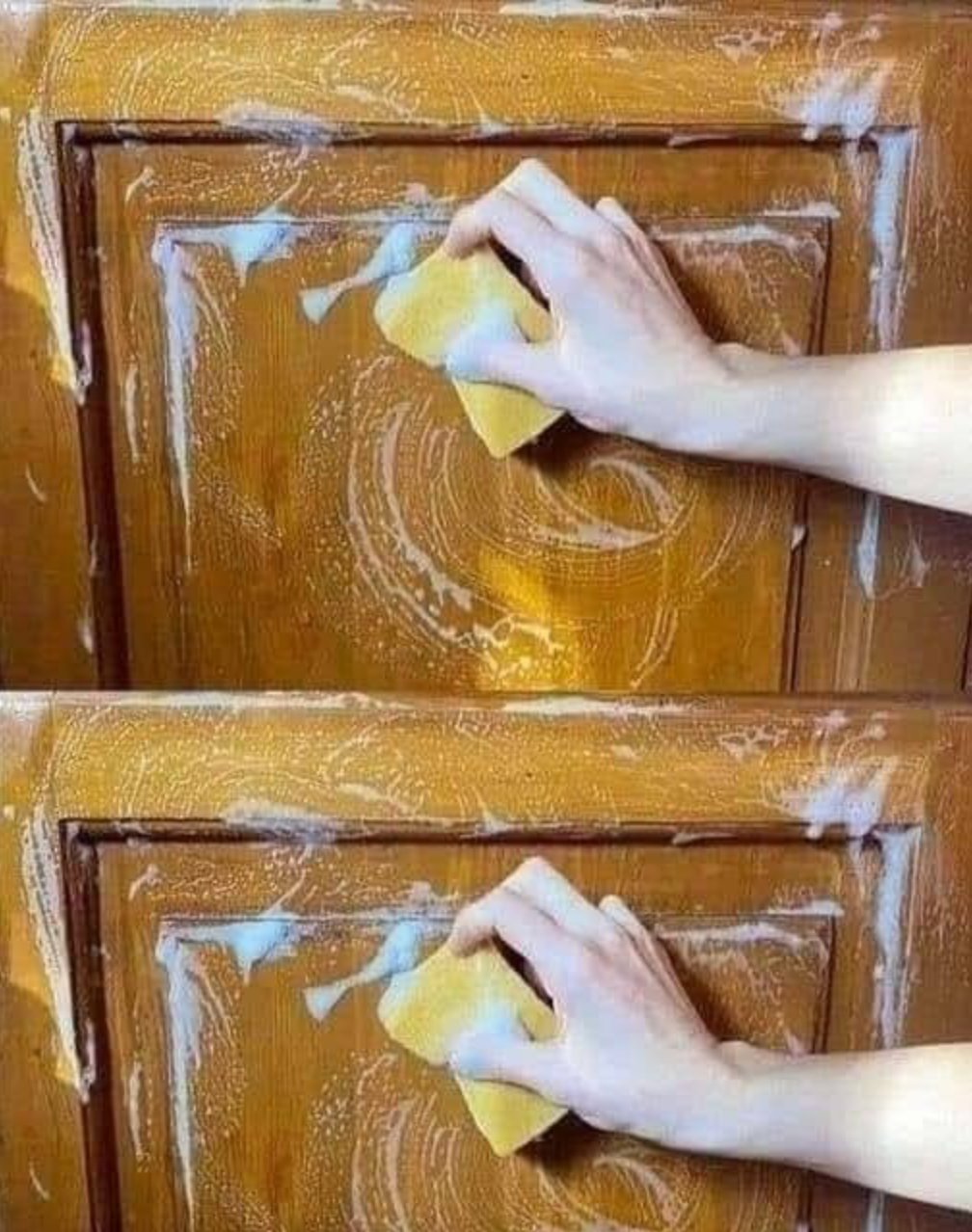
- Dip a soft sponge, microfiber cloth, or soft-bristled brush into the paste.
- Gently rub onto greasy areas, focusing on:
- Cabinet handles and knobs
- Edges around the stove
- Panels directly above cooking surfaces
- Use circular motions for best results.
Tip: Baking soda is mildly abrasive, but gentle rubbing prevents scratching.
Step 4: Let It Sit (Optional for Stubborn Grease)
- If grease is baked-on or thick, leave the paste on for 5–10 minutes.
- Do not let it dry completely; this could make it harder to wipe off.
Step 5: Wipe Clean
- Use a clean, damp cloth or sponge to wipe away paste and grease.
- Rinse the cloth frequently to avoid redistributing grease.
- Repeat on stubborn spots if necessary.
Step 6: Dry and Polish
- Use a soft, dry cloth to buff cabinets to a shine.
- For wooden cabinets, apply a small amount of olive oil or furniture polish to restore luster and protect the surface.
Extra tip: Polishing with a microfiber cloth adds shine without leaving residue.
Optional Enhancements
- Lemon juice: Boosts grease-cutting power and leaves a fresh scent.
- Essential oils: Add a few drops of tea tree, eucalyptus, or lavender oil for antibacterial benefits.
- Sprinkle method: Lightly sprinkle baking soda on a damp sponge and rub—great for lightly greasy cabinets.
Why This Hack Works So Well
- Baking soda lifts grease without scratching the surface.
- Vinegar dissolves oil and neutralizes odors.
- Natural and safe: No toxic fumes, safe for homes with kids or pets.
- Cost-effective: Both ingredients are inexpensive and widely available.
Together, these ingredients provide a powerful, eco-friendly, chemical-free solution that works as well (or better) than many store-bought degreasers.
Tips for Maintaining Grease-Free Cabinets
- Wipe weekly: Mix vinegar and water (1:3) for quick cleaning to prevent buildup.
- Use range hoods: Turn on exhaust fans while cooking to reduce airborne grease.
- Address spills immediately: Wipe splatters before they dry.
- Layer protection: Consider a clear cabinet liner in high-grease areas.
Surfaces You Can Use This On
- Painted or laminated cabinets
- Wood (test first on delicate finishes)
- Metal or stainless steel handles
- Glass-front cabinets
Avoid using abrasive scrubbing pads on delicate or polished surfaces—they can scratch.
Safety Notes
- Baking soda and vinegar are safe, non-toxic, and environmentally friendly.
- Avoid ingesting paste or getting it in eyes. Rinse thoroughly after cleaning.
- Keep away from children when applying, especially if essential oils are added.
Conclusion
With just baking soda and vinegar, you can transform your kitchen cabinets from sticky and grimy to fresh, clean, and grease-free. This hack is:
- Cheap and natural
- Safe for your family and pets
- Effective on the toughest grease
- Environmentally friendly
Best of all, it doesn’t rely on harsh chemicals, fumes, or expensive cleaning products—just simple, kitchen-friendly ingredients you probably already have on hand.