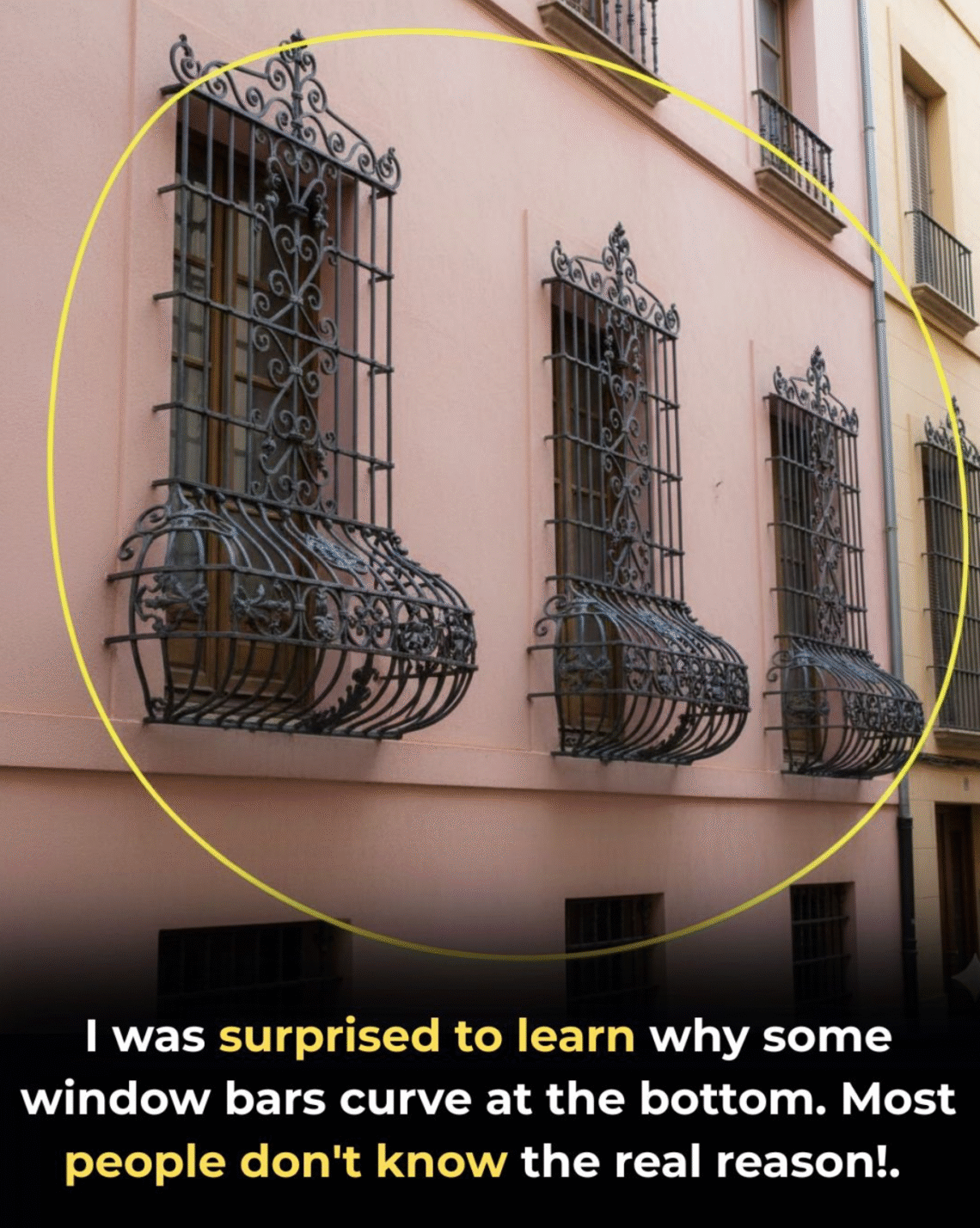
If you’ve ever walked through older neighborhoods or even modern homes in certain regions, you may have noticed that some window bars don’t just run straight across—they curve outward at the bottom, forming a slight bulge or rounded shape.
At first glance, this design might seem decorative or random. But in reality, those curved window bars—often called “potbelly bars” or “window baskets”—serve several practical purposes, combining function, safety, and aesthetics.
Let’s take a deeper look at why this design exists and why it continues to be used today.
1. Space for Plants and Window Gardens
One of the most common reasons for curved window bars is to create extra space outside the window.
The outward curve forms a small enclosure that can hold:
- Flower pots
- Herb planters
- Decorative plants
Why This Matters
In homes without balconies or yards, especially in cities, window space becomes valuable.
The curved bars act like a mini balcony, allowing residents to:
- Grow herbs like mint or basil
- Display flowers
- Add greenery to small living spaces
This design is especially popular in urban areas where outdoor space is limited.
2. Improved Ventilation and Airflow
Straight window bars sit close to the window frame, which can slightly restrict airflow—especially if objects are placed behind them.
Curved bars create a gap between the window and the bars, allowing:
- Better air circulation
- Windows to open more freely
- Curtains to move without obstruction
Practical Benefit
This is particularly useful in warm climates, where natural ventilation is important for cooling homes.
3. Extra Room for Air Conditioning Units
In some cases, the curved shape provides space for:
- Small window air conditioning units
- Fans
- Ventilation equipment
Instead of removing security bars entirely, the curved design allows these appliances to fit within the protected area.
This keeps:
- The appliance secure
- The window functional
- The home protected
4. Safety and Emergency Access
While window bars are primarily installed for security, safety is also an important consideration.
Curved bars can:
- Provide a little extra space for movement
- Make it easier to reach locks or latches
- Reduce the feeling of confinement
However, it’s important to note that modern safety standards often recommend window bars with quick-release mechanisms, especially in bedrooms, to allow escape in case of fire.
5. Aesthetic and Architectural Design
Not all design choices are purely functional—many are also about appearance.
Curved window bars add:
- Visual interest
- Softness compared to straight lines
- A decorative, classic look
In many architectural styles—especially in Mediterranean, European, and older urban designs—these bars are part of the building’s identity.
They can make a home feel:
- More elegant
- More traditional
- More welcoming
6. Cultural and Regional Influence
Curved window bars are more common in certain parts of the world.
They are frequently seen in:
- Southern Europe
- Latin America
- North Africa
- Older urban neighborhoods
In these regions, homes often balance:
- Security needs
- Climate considerations
- Limited outdoor space
The curved design becomes a practical solution that fits all three.
7. Added Functionality Without Losing Security
The main purpose of window bars is security—to prevent unauthorized entry.
Curved bars maintain this protection while adding usability.
They allow homeowners to:
- Store items safely near windows
- Decorate exterior spaces
- Use windows more flexibly
All without removing the protective barrier.
8. Protection for Items Placed Outside
If you place something outside a window—like a flower pot—there’s always a risk it could fall.
Curved bars act as a protective cage, helping to:
- Keep items from slipping
- Prevent accidental drops
- Protect people below
This is especially important in multi-story buildings.
9. Pet Safety
In homes with pets—especially cats—curved window bars can provide a small safe space.
They allow pets to:
- Sit near the window
- Enjoy fresh air
- Observe outside activity
All while preventing them from falling or escaping.
10. Psychological Comfort
Straight, flat bars can sometimes feel restrictive or “prison-like.”
The curved design softens that feeling by:
- Creating a sense of openness
- Adding depth and space
- Making the window feel less confined
This small change can improve how a room feels, especially in smaller homes or apartments.
11. Historical Origins
The design of curved window bars dates back many years.
In older buildings, especially in Europe, blacksmiths would craft iron bars by hand. Adding a curve allowed them to:
- Increase functionality
- Showcase craftsmanship
- Customize designs for different homes
Over time, the style became both practical and decorative, and it continues to be used today.
12. Modern Variations
Today, curved window bars come in many styles.
Some are:
- Simple and minimal
- Highly decorative with patterns
- Combined with modern materials
They can be made from:
- Iron
- Steel
- Aluminum
Modern designs often include removable or openable sections for safety compliance.