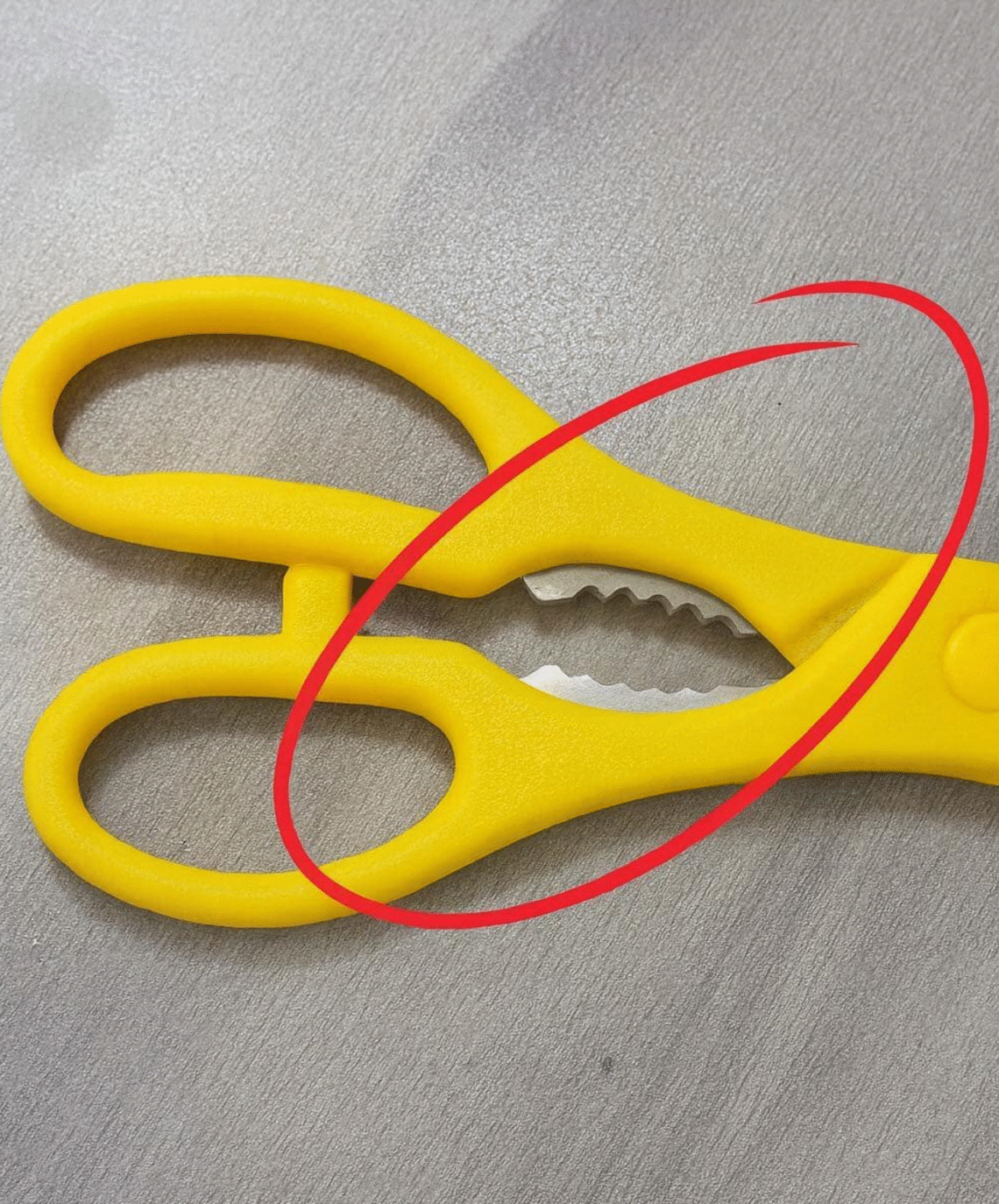
Kitchen scissors are among the most versatile tools found in a modern kitchen. At first glance, they appear to be simple cutting instruments designed for tasks such as trimming herbs, cutting packaging, or preparing food items. However, a closer inspection reveals that many kitchen scissors include an additional feature that often goes unnoticed or misunderstood: a small toothed or ridged section located between the handles.
This part may look unusual or even decorative to some users, but it is actually a carefully engineered multi-purpose component designed to extend the functionality of the scissors beyond cutting. It reflects thoughtful design principles that prioritize convenience, efficiency, and practicality in everyday kitchen tasks.
Understanding the purpose of this toothed section not only helps users make better use of their tools but also highlights how small design details can significantly improve functionality in household equipment.
What Is the Toothed Part?
The toothed section on kitchen scissors is typically located where the two handles meet when the scissors are closed. It consists of small ridges, grooves, or serrations that interlock or oppose each other when pressure is applied.
This feature is sometimes referred to by various functional names depending on its intended use, such as:
- A gripping notch
- A jar-opening aid
- A nutcracker
- A shell-cracking section
Despite these different names, its core purpose remains the same: to provide a textured gripping surface that increases friction and allows the user to apply controlled force to objects.
Unlike the smooth blades used for cutting, the toothed section is not meant for slicing. Instead, it is designed for holding, compressing, cracking, or stabilizing objects that require additional grip or pressure.
The Engineering Behind the Design
The inclusion of the toothed section is not accidental. It is the result of intentional ergonomic and mechanical design.
1. Material Strength
Kitchen scissors are typically made from stainless steel or similarly durable metals. The toothed section is integrated into the same structure, ensuring it can withstand pressure without bending or breaking.
2. Surface Texture
The ridges or grooves increase surface friction. This is essential when dealing with objects that are:
- Smooth
- Round
- Slippery
- Difficult to grip by hand
The increased friction reduces the likelihood of slipping during use.
3. Leverage Principle
When the scissors are used in this way, the handles act as levers. Applying pressure to the handles translates into concentrated force at the toothed section. This allows users to exert more force than they could with their fingers alone.
4. Compact Integration
Instead of requiring a separate tool, the toothed section is integrated directly into the scissors. This reduces the need for additional kitchen gadgets and saves space.
Primary Functions of the Toothed Section
The toothed part of kitchen scissors serves multiple functions. Each function is based on the same principle: improving grip and applying controlled force.
1. Opening Tight Jar Lids
One of the most common uses is opening jars with tightly sealed lids.
The Problem
Jar lids often become difficult to open due to:
- Vacuum sealing
- Tight manufacturing tolerances
- Residue buildup around the lid
- Reduced grip due to smooth surfaces
How the Toothed Section Helps
The ridges of the scissors can grip the lid securely. By placing the lid between the toothed surfaces and applying pressure, friction increases significantly. This allows the user to twist the lid with less effort.
Why It Works
The added friction compensates for the lack of grip in human hands. Instead of relying solely on hand strength, the tool distributes pressure evenly across the lid.
2. Cracking Nuts
Another practical use is cracking nuts such as walnuts, hazelnuts, or pecans.
The Challenge
Nut shells are hard and require controlled force to crack without damaging the edible part inside.
How the Toothed Section Functions
The ridges hold the nut in place while pressure is applied. The force is concentrated at a specific point, causing the shell to crack.
Advantages
- More controlled than using random objects
- Reduces the risk of crushing the nut completely
- Provides a quick solution without specialized tools
3. Cracking Shellfish
In kitchens where seafood is prepared, the toothed section can assist in cracking shells.
Examples
- Crab legs
- Lobster shells
- Shrimp shells
How It Works
The ridges grip the hard shell and allow the user to apply pressure gradually until the shell breaks open. This can be especially helpful when preparing seafood dishes that require shell removal.
4. Gripping Slippery Objects
The toothed section can be used to hold objects that are difficult to grip manually.
Examples
- Small food items
- Rounded ingredients
- Wet or oily surfaces
The ridges prevent slipping by increasing friction between the tool and the object.
5. Stabilizing Items During Preparation
When performing tasks that require precision, the toothed section can act as a stabilizing mechanism.
For example:
- Holding a small bone while cutting around it
- Stabilizing ingredients that move easily on a cutting surface
- Securing items temporarily before further processing
This improves safety and control during food preparation.
6. Assisting with Bottle Caps (In Some Designs)
Certain kitchen scissors are designed with variations of the toothed section that can assist in opening bottle caps.
While not universally effective for all bottle types, the ridges can:
- Grip the edges of caps
- Provide leverage for twisting
- Help break tight seals
This adds another layer of convenience to the tool.
Variations in Design
Not all kitchen scissors have identical toothed sections. Variations exist depending on manufacturer design and intended use.
1. Deep Serrations
Some models feature deep grooves that provide stronger grip, suitable for tougher tasks like cracking shells.
2. Shallow Ridges
Other models include lighter textures, primarily intended for jar opening and light gripping tasks.
3. Integrated Cutouts
In some designs, the toothed section is combined with additional features such as:
- Bottle opener shapes
- Wire cutting grooves
- Bone cutting notches
These multi-functional designs enhance the versatility of the scissors.
Advantages of Having a Toothed Section
The inclusion of this feature provides several benefits:
1. Multi-Functionality
A single tool can perform multiple tasks, reducing the need for additional kitchen gadgets.
2. Space Efficiency
Fewer tools are needed in the kitchen, which is especially beneficial in small kitchens.
3. Cost Efficiency
Users do not need to purchase separate tools like jar openers or nutcrackers.
4. Convenience
The feature is always available when the scissors are in hand, eliminating the need to search for another tool.
5. Improved Safety
Using a tool designed for grip reduces the risk of slipping, which can prevent accidents.
Limitations of the Toothed Section
Despite its usefulness, the toothed part has limitations:
1. Not a Replacement for Specialized Tools
It is not as powerful as dedicated tools such as:
- Heavy-duty nutcrackers
- Professional jar openers
- Seafood cracking tools
2. Limited Strength
Extremely hard or large objects may require more force than the scissors can safely provide.
3. Variability in Effectiveness
The effectiveness depends on:
- The design of the scissors
- The size and shape of the object
- The amount of force applied
4. Requires Proper Technique
Incorrect use may reduce effectiveness or damage the object being handled.
Proper Ways to Use the Toothed Section
To maximize effectiveness:
- Position the object securely between the ridges
- Apply gradual pressure rather than sudden force
- Maintain a stable grip on the handles
- Adjust positioning if the object slips
- Use controlled movements rather than excessive force
These techniques ensure safe and efficient use.
Misconceptions About the Toothed Part
Many users misunderstand the purpose of this feature. Common misconceptions include:
- It is purely decorative
- It is a manufacturing defect
- It has no real function
- It is rarely useful
In reality, it is a deliberate and practical design element intended to enhance usability.
Why It Is Often Overlooked
Despite its usefulness, the toothed section is often ignored because:
- Users are unaware of its purpose
- It is not explicitly explained in product packaging
- Many people rely on separate tools out of habit
- Its appearance does not clearly indicate its function
As a result, its potential remains underutilized in many households.
The Broader Perspective: Thoughtful Tool Design
The toothed section reflects a broader principle in product design: combining multiple functions into a single tool.
This approach:
- Saves space
- Reduces clutter
- Improves efficiency
- Enhances user convenience
It demonstrates how small design features can significantly improve everyday experiences when used correctly.