A Loving Tribute to the Legendary 11-Herb Blend
There are few dishes in the world that carry the emotional weight of fried chicken. It is more than food—it is memory, ritual, and comfort woven together through heat, aroma, and time. From family kitchens to roadside diners, fried chicken has always been about bringing people together.
This version is a respectful homage to the iconic flavor tradition associated with KFC and the legacy of Colonel Sanders. While the original 11-herb and spice formula remains a closely guarded secret, this recreation draws on culinary knowledge, experimentation, and decades of shared experience to capture the spirit—if not the exact formula—of that unforgettable taste.
But more importantly, this recipe is about something deeper: creating your own version of comfort, with your own hands, in your own kitchen.
The Soul of Fried Chicken
At its best, fried chicken is a perfect contrast of textures and flavors:
- A crisp, craggy crust that shatters gently under your bite
- A juicy, tender interior that remains moist and flavorful
- A seasoning profile that balances salt, spice, and warmth
Achieving this balance is not about complexity—it is about precision and patience.
Understanding the “11-Herb” Inspiration
The famous blend is often described as a mix of herbs and spices that create:
- Depth without overpowering heat
- Warmth without harshness
- A layered flavor that unfolds gradually
While no one outside the company truly knows the exact formula, common elements in inspired versions include:
- Paprika
- Garlic powder
- Onion powder
- Dried thyme
- Dried basil
- Oregano
- Black pepper
- White pepper
- Salt
- Mustard powder
- A subtle touch of cayenne
The magic is not just in the ingredients—but in how they are balanced and applied.
Ingredients
For the Chicken
- 1 whole chicken, cut into pieces (or 8–10 parts)
- Salt (for initial seasoning)
For the Marinade (Buttermilk Soak)
- 2 cups buttermilk
- 1 teaspoon salt
- 1 teaspoon black pepper
- Optional: a pinch of paprika
Why Buttermilk?
- Tenderizes the meat
- Adds subtle tang
- Helps the coating adhere
For the Seasoned Flour Coating
- 2 cups all-purpose flour
- 1 tablespoon paprika
- 1 teaspoon garlic powder
- 1 teaspoon onion powder
- 1 teaspoon dried thyme
- 1 teaspoon dried basil
- 1 teaspoon oregano
- 1 teaspoon black pepper
- ½ teaspoon white pepper
- 1 teaspoon salt
- ½ teaspoon mustard powder
- Optional: pinch of cayenne
For Frying
- Vegetable oil or peanut oil (enough for deep frying)
Step-by-Step Preparation
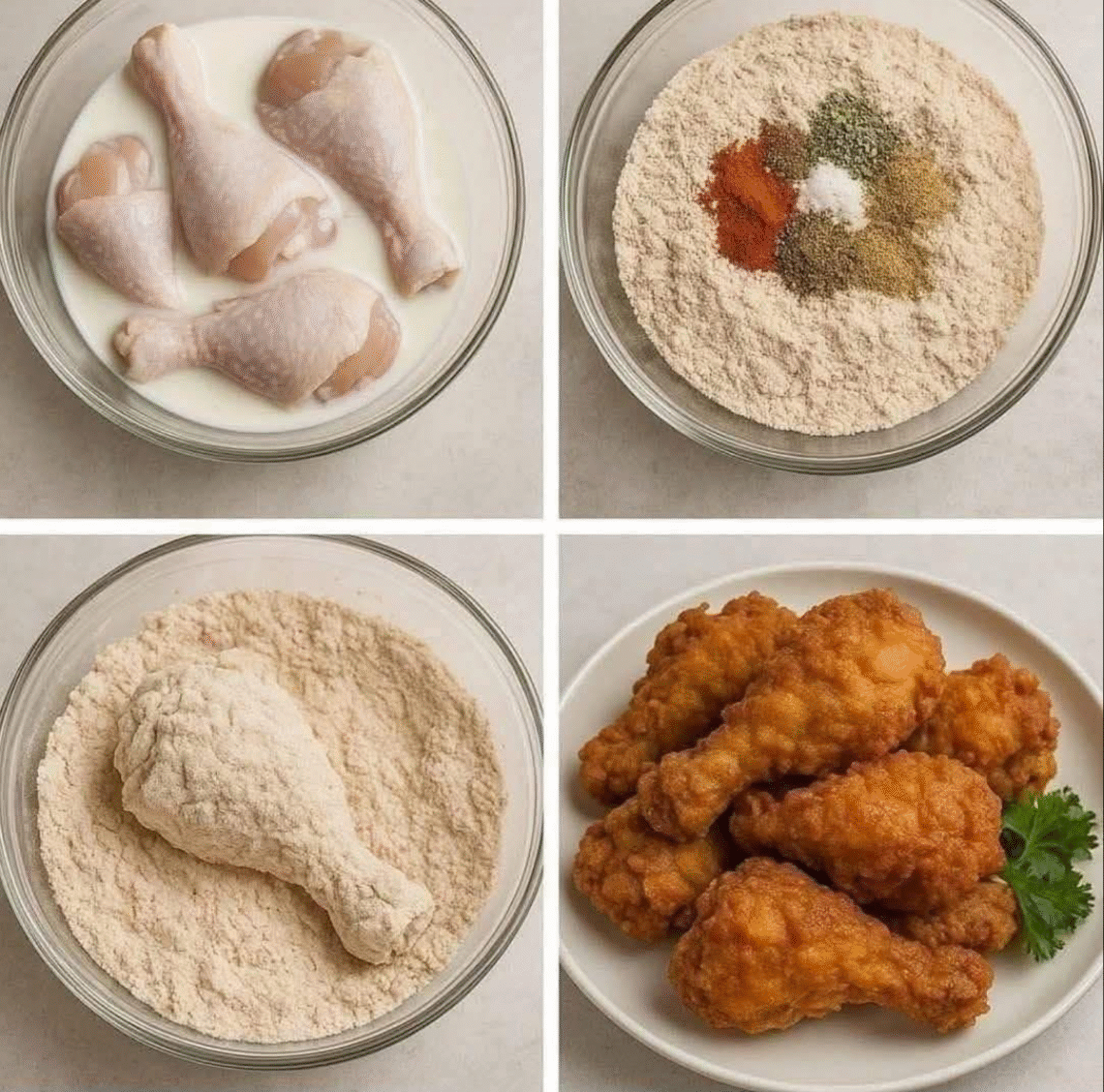
Step 1: Season and Marinate
Lightly salt the chicken pieces.
Place them in the buttermilk mixture and refrigerate for at least 4 hours, preferably overnight.
What Happens Here
- The chicken absorbs flavor
- The meat becomes more tender
- The foundation for juiciness is set
Step 2: Prepare the Coating
In a large bowl, mix all the flour and spices thoroughly.
This step is crucial—uneven mixing leads to uneven flavor.
Step 3: Dredge the Chicken
Remove each piece from the buttermilk, letting excess drip off.
Coat thoroughly in the seasoned flour.
Chef’s Technique for Extra Crispiness
- Press the flour firmly onto the chicken
- Let coated pieces rest for 10–15 minutes before frying
This creates that signature craggy texture.
Step 4: Heat the Oil
Heat oil to about 175°C (350°F).
Maintaining temperature is key:
- Too hot → burnt outside, raw inside
- Too cool → greasy coating
Step 5: Fry in Batches
Carefully place chicken into the oil.
Fry for:
- 12–15 minutes (depending on size)
Turn occasionally for even cooking.
Step 6: Rest and Drain
Remove chicken and place on a rack or paper towels.
Let it rest for a few minutes.
Why This Matters
- Allows juices to redistribute
- Keeps crust crisp
The Sensory Experience
Sound
The gentle sizzle as chicken hits hot oil signals the beginning of transformation.
Aroma
As it cooks, your kitchen fills with:
- Warm paprika
- Herbal notes
- Deep savory richness
It’s the kind of smell that draws people in without invitation.
Texture
- Outside: crisp, irregular, golden
- Inside: juicy, tender, flavorful
Flavor
- Balanced saltiness
- Gentle warmth from spices
- Subtle herbal complexity
- A lingering savory finish
Why This Recipe Works
1. Layered Flavor
Flavor is built in stages:
- Marinade
- Coating
- Frying
Each step adds depth.
2. Moisture Retention
Buttermilk and proper frying keep the chicken juicy.
3. Texture Control
Resting the coated chicken before frying creates that iconic crust.
4. Temperature Management
Consistent oil heat ensures even cooking.
Tips for Perfect Fried Chicken
Don’t Skip the Marinade
It’s essential for tenderness and flavor.
Use a Thermometer
Consistent oil temperature is key.
Avoid Overcrowding
Too many pieces lower the oil temperature.
Let It Rest After Frying
This improves both texture and flavor.
Serving Suggestions
Classic Pairings
- Mashed potatoes
- Coleslaw
- Biscuits or bread
Simple Additions
- Pickles
- Hot sauce
- Honey drizzle for contrast
Variations to Explore
Spicy Version
Add more cayenne or chili powder.
Extra Crispy
Double-dredge the chicken for a thicker crust.
Oven Finish Method
Fry briefly, then finish in the oven for a lighter texture.
The Emotional Power of Fried Chicken
There is something deeply human about frying chicken.
It is:
- Hands-on
- Sensory
- Grounded in tradition
It connects generations—from grandparents who cooked without measurements to modern cooks recreating those flavors with intention.
This dish is not about perfection.
It is about presence.